
David Hockney
Period - Post-war and Contemporary
Context - British Pop Art, Neo-expressionism, Young Contemporaries, landscape painting, portraiture, photography, and digital art
Cultural Signal - Expanding the possibilities of seeing through experimentation with colour, perspective, technology, and everyday life
Medium - Painting, drawing, printmaking, photography, collage, iPad drawing, and immersive installation
Language - Vibrant colour, flattened perspective, swimming pools, portraits, landscapes, multiple viewpoints, visual storytelling
In memory of David Hockney, this week's Artist Spotlight is dedicated to one of Britain's most celebrated artists. Known for signing off his letters with the simple phrase, "Love life. David Hockney," he left behind a body of work defined by curiosity, innovation, and an enduring enthusiasm for the world around him.
David Hockney passed away on 11 June 2026 at the age of 88. Widely regarded as one of the most influential artists of the 20th and 21st centuries, he was not only a leading figure in British art but also one of the most recognised and celebrated artists worldwide.
Few artists have shaped contemporary visual culture as profoundly as David Hockney. Over a career spanning more than seven decades, he continually reinvented his practice while remaining committed to one central idea: the act of looking. Working across painting, photography, printmaking, digital media, and immersive environments, Hockney challenged conventional ways of seeing.
Born in Bradford, Yorkshire, in 1937, Hockney grew up in what he described as a "radical working-class family." He studied at Bradford College of Art before moving to London's Royal College of Art in 1959, where he emerged as one of the leading figures of a new generation of British artists. During this period, he developed a distinctive visual language that combined elements of Pop Art with personal narratives, often addressing themes of identity, relationships, and sexuality.
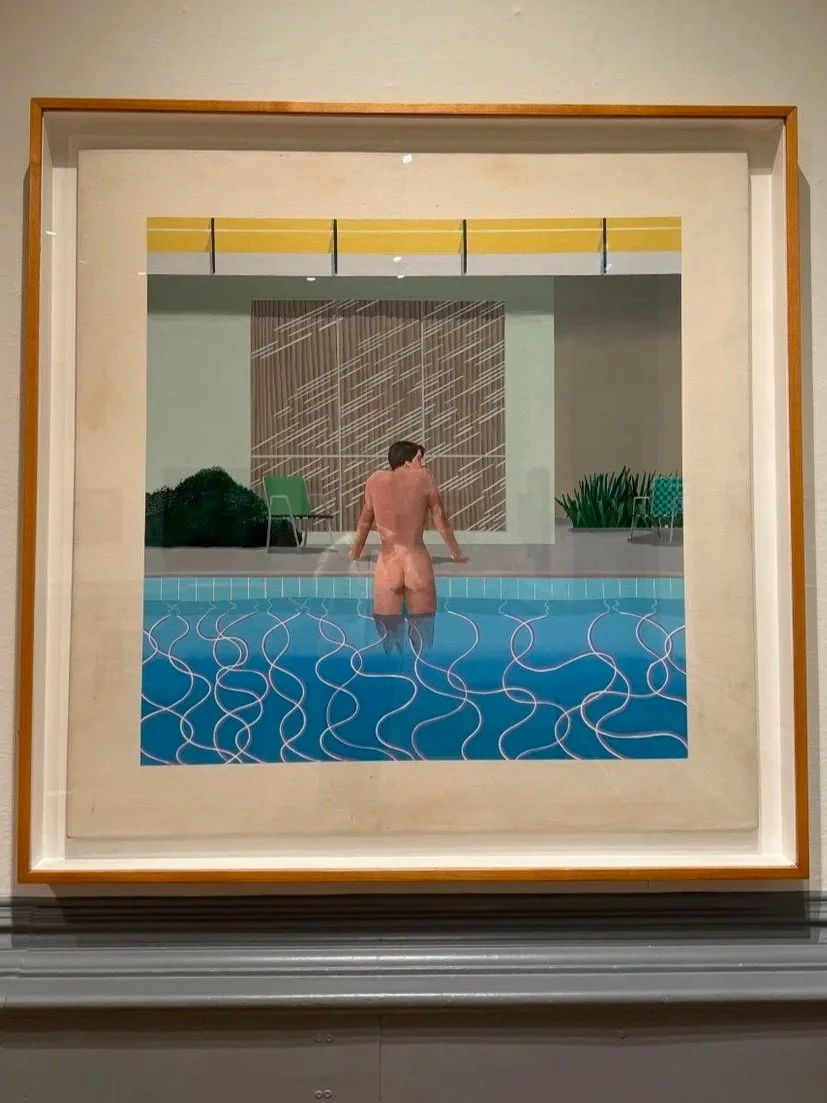
David Hockney, Peter Getting Out of Nick's Pool (1966), installation view, Walker Art Gallery, 2026. Photo: Art & Butter.
He came out as being gay when homosexuality was illegal in Britain, and his early paintings were quietly radical. Rather than concealing his identity, he incorporated personal experiences and same-sex relationships into his work, helping expand the possibilities of representation within contemporary art.
In 1964, Hockney moved to Los Angeles, a city that would become synonymous with some of his most celebrated works. Captivated by California's bright light, modern architecture, and outdoor lifestyle, he began creating the iconic swimming pool paintings that remain among the most recognisable images in post-war art. Works such as A Bigger Splash (1967) transformed ordinary scenes into powerful explorations of light, movement, and perception.
Portraiture remained another constant throughout his career. From intimate depictions of friends and family to large-scale double portraits, Hockney approached portraiture as a study of human relationships and presence. His paintings often reveal as much about the connection between artist and sitter as they do about the individuals themselves.
Beyond portraits and pools, Hockney was deeply inspired by landscape. Returning frequently to Yorkshire in the 1990s and 2000s, he produced monumental paintings of the English countryside that celebrated seasonal change, colour, and the experience of moving through space. These works demonstrated his lifelong fascination with perspective and his desire to represent the world as it is experienced rather than simply observed.
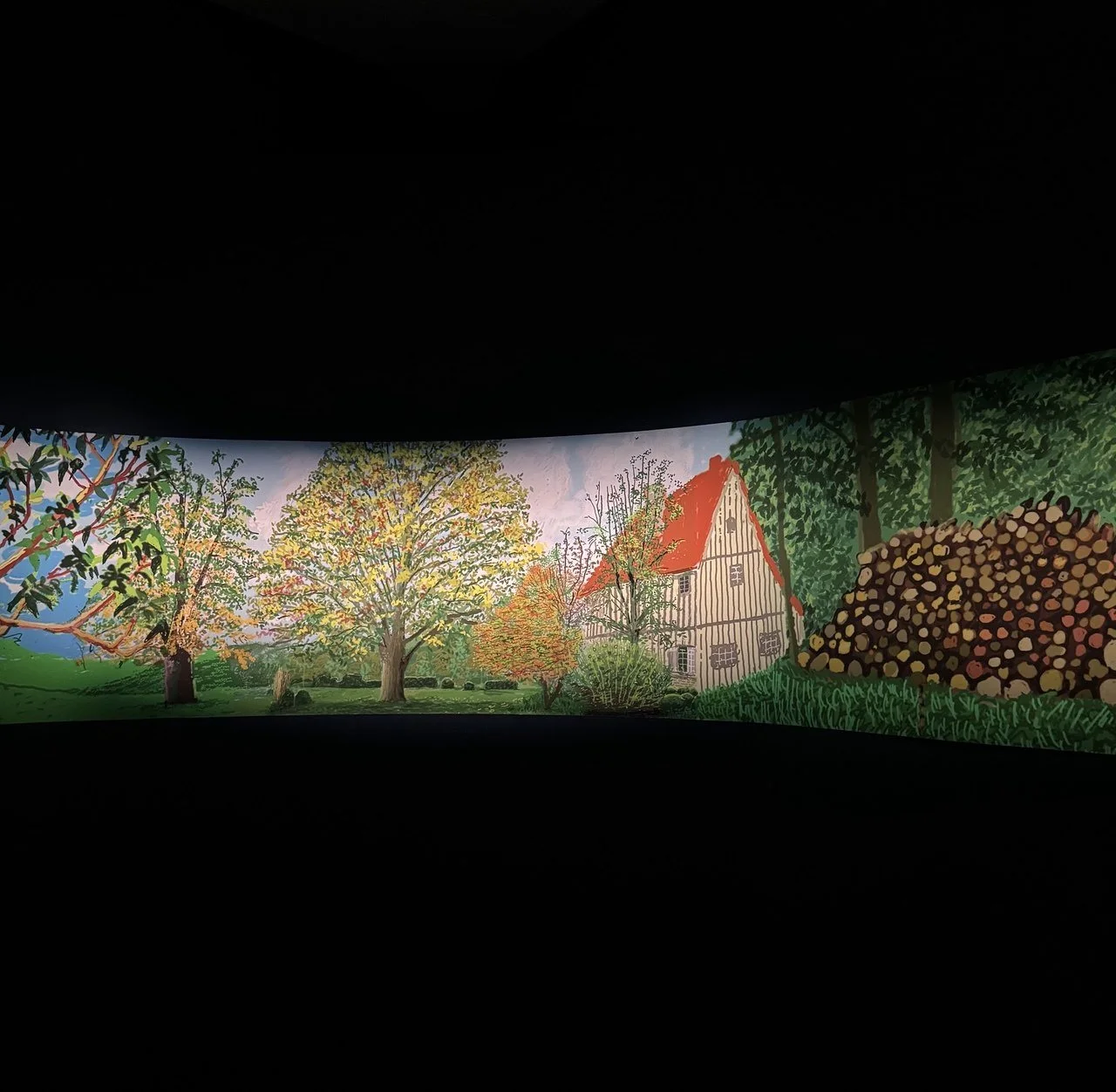
David Hockney, David Hockney: A Year in Normandie and Some Other Thoughts about Painting (2026), installation view, Serpentine Gallery, 2026. Photo: Art & Buter.
Experimentation defined every stage of Hockney's practice. Inspired by Pablo Picasso's relentless curiosity, he embraced new technologies throughout his life, becoming an early advocate for digital drawing and creating acclaimed works on iPhones and iPads. Whether working with acrylic paint, photography, watercolour, collage, or digital tools, he consistently sought new ways to explore visual perception.
Why Now?
David Hockney's work remains remarkably relevant in an era shaped by digital images and constant visual consumption. Long before smartphones and social media transformed how we experience the world, Hockney was questioning how images influence perception and exploring new technologies as artistic tools. His career stands as a reminder that innovation and curiosity are not limited by age, medium, or tradition.
Biographical information sourced from the artist’s official website.