
Man Ray
Period - Modernism / Avant-Garde (early–mid 20th century)
Context - Experimental photography and interdisciplinary practice within Dada and Surrealism
Cultural Signal - Photography transformed from documentation into experimental artistic expression
Medium - Photography, photograms (“rayographs”), film, objects, prints
Language - Surreal imagery, abstraction, distortion, shadow play, fashion photography, experimental darkroom techniques
Perhaps we know Man Ray through a single iconic image, Ingres’s Violin, or through his connection to Surrealism. But reducing him to only photography overlooks what made his practice so influential. Man Ray approached art through experimentation, constantly moving between mediums and techniques in search of new visual possibilities.
Born Emmanuel Radnitzky in New York, Man Ray began his artistic career in the 1910s, initially working as a painter while becoming involved with the Dada movement alongside figures such as Marcel Duchamp. Yet it was after moving to Paris in the 1920s that photography became central to his practice. In a city shaped by avant-garde experimentation, he developed a visual language that blurred the boundaries between fine art, fashion, portraiture, and abstraction.
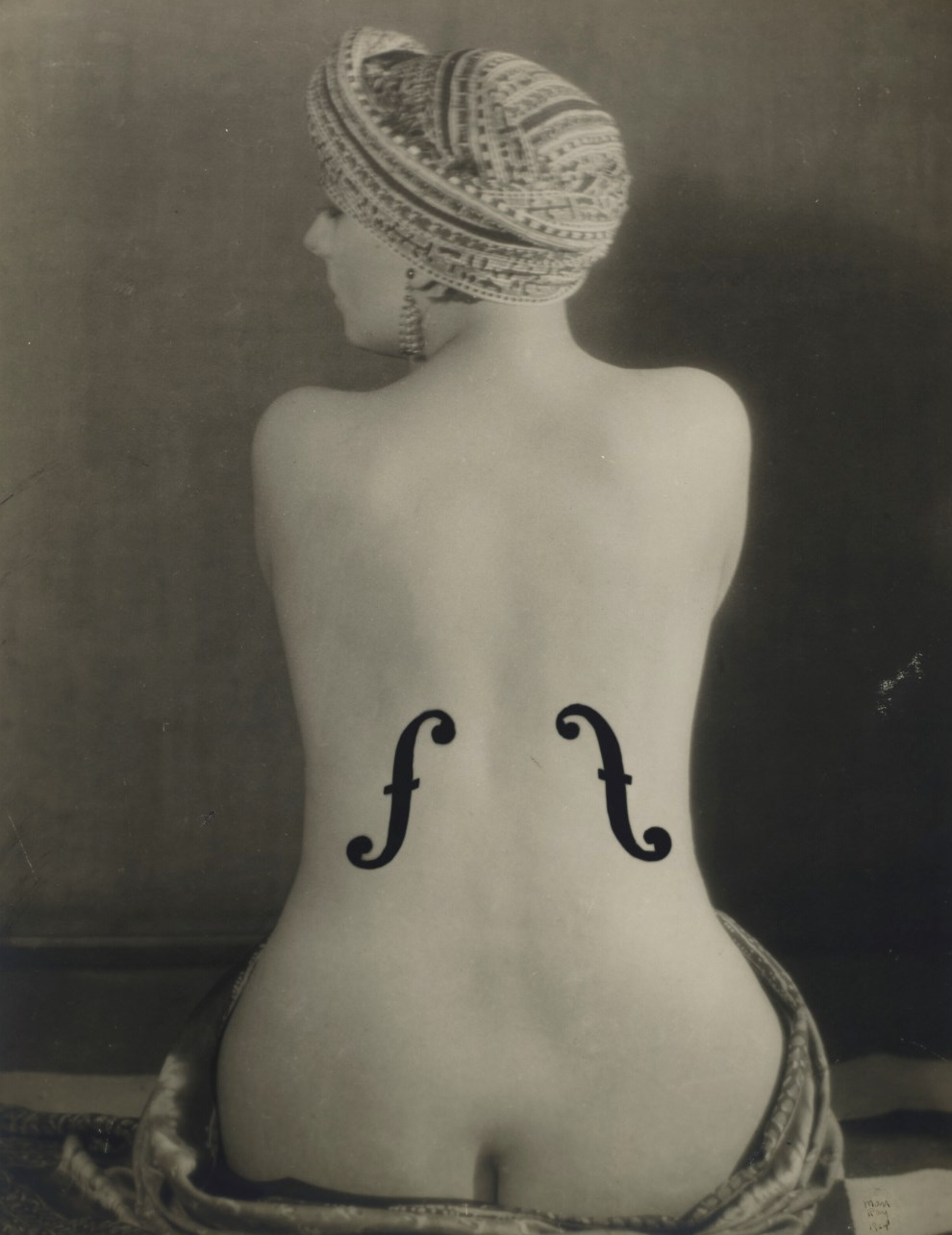
Man Ray, Le Violon d'Ingres, 1924. Gelatin silver print, Christie’s.
Unlike traditional photographers focused purely on representation, Man Ray used the camera and darkroom as tools for invention. One of his most significant contributions came through his “rayographs”, camera-less photographs created by placing objects directly onto photosensitive paper and exposing them to light. The resulting images transformed ordinary objects into abstract compositions of shadow and form, challenging conventional ideas of what photography could be.
Throughout the 1920s and 1930s, Man Ray continued experimenting with techniques such as solarisation, double exposure, distortion, and film. His work often carries the dreamlike and irrational qualities associated with Surrealism, where familiar subjects become strange, fragmented, or psychologically charged. Yet alongside this experimentation, he also maintained a highly successful commercial practice.
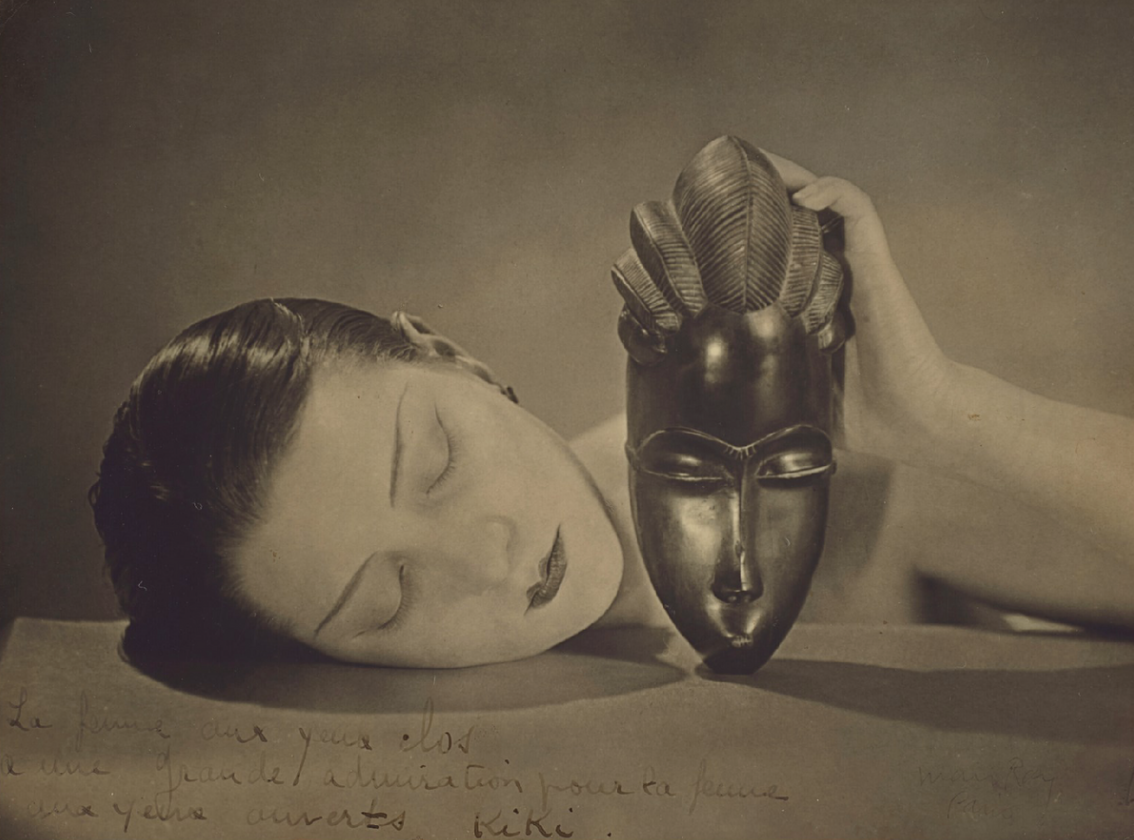
Man Ray, Noire et Blanche, 1926. Gelatin silver print, Christie’s.
Fashion magazines and advertisers increasingly embraced photography during this period, allowing Man Ray to work professionally while continuing his artistic explorations. His images appeared regularly in French and American editions of Vogue from 1924 onwards. Designers such as Coco Chanel and Elsa Schiaparelli commissioned him to photograph their collections, while artists including Pablo Picasso, Georges Braque, and Alberto Giacometti sat for his portraits.
This dual position between commercial and experimental work is partly what makes Man Ray so relevant today. He moved fluidly between disciplines without treating photography as secondary to painting or sculpture. Instead, he helped establish photography itself as a serious artistic medium capable of innovation, conceptual depth, and emotional impact.
Why now?
Man Ray’s work resonates strongly today because contemporary culture increasingly values multidisciplinary practices and experimentation across mediums. At the same time, the growing visibility of photography and prints within the art market has made artists like Man Ray more accessible to newer collectors, while recent interest in Surrealism continues to position him as one of the defining image-makers of the 20th century.
Biographical information sourced from Man Ray: Liberating Photography by Nathalie Herschdorfer.