
Sir Winston Churchill
Period - Modern (early–mid 20th century)
Context - Painting as private creative practice beyond professional identity
Cultural Signal - Art as refuge: creativity functioning beyond profession, status, and identity
Medium - Oil painting
Language - Impressionistic landscapes, light, architecture, gardens, travel scenes
Perhaps we know him as a wartime leader, a defining political figure of the 20th century. But not many of us think of Sir Winston Churchill as an artist. Yet painting was not a side note in his life, but a deeply personal and consistent practice that shaped how he experienced the world.
Churchill began painting in 1915, during a period of political crisis. What started as a form of escape quickly became a lifelong discipline. Over the years, he produced more than 500 works, primarily landscapes, painted during travels in France, Morocco, and at his home in Chartwell.
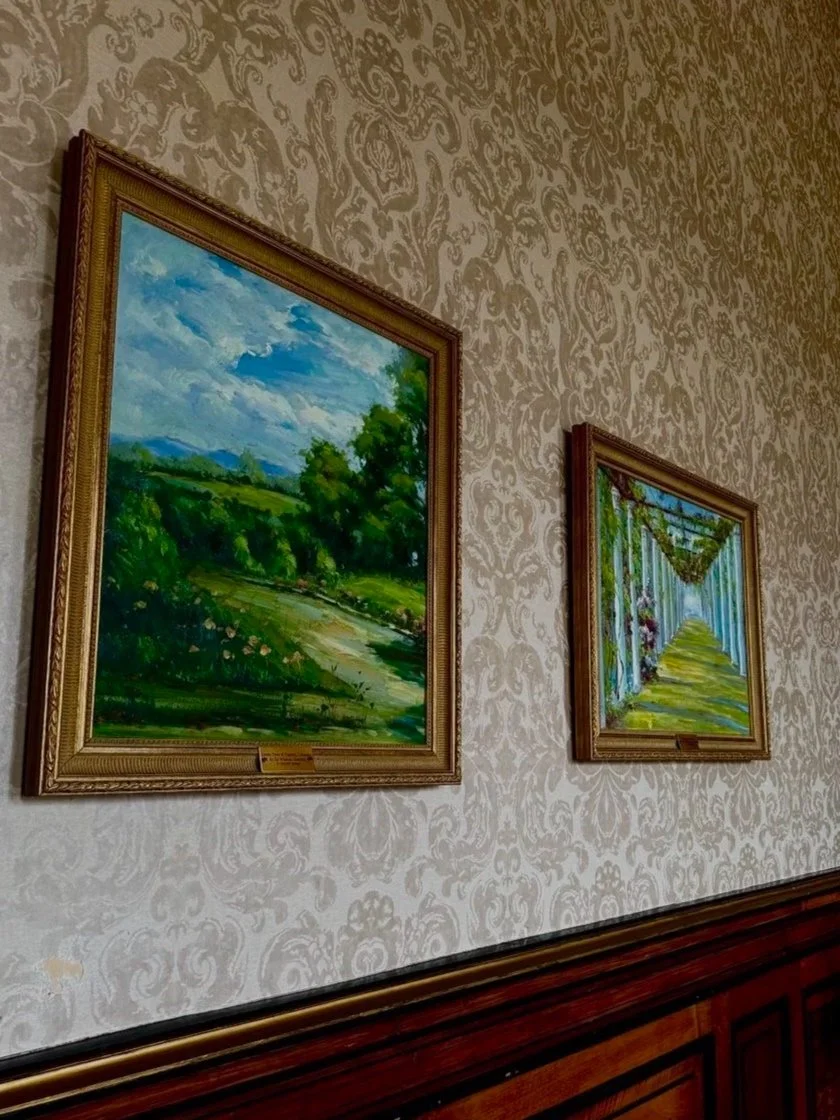
Sir Winston Churchill, installation view, Luton Hoo, 2025. Photo: Art & Butter.
Working in oil, Churchill developed a visual language rooted in observation and atmosphere. His paintings often focus on light and how it falls across water, architecture, and greenery. Gardens, lakes, and sunlit buildings appear repeatedly, suggesting a search for calm, order, and clarity. There is a noticeable influence of Impressionism in his work, particularly in his loose brushwork and attention to changing light conditions.
Unlike professionally trained artists, Churchill approached painting without the pressure of the art market or institutional expectation. This gave his work a certain freedom. The compositions are not concerned with innovation in a formal sense, but rather with capturing a moment, a mood, or a sense of place. Painting, for him, was less about producing art for an audience and more about seeing and learning how to capture moments.
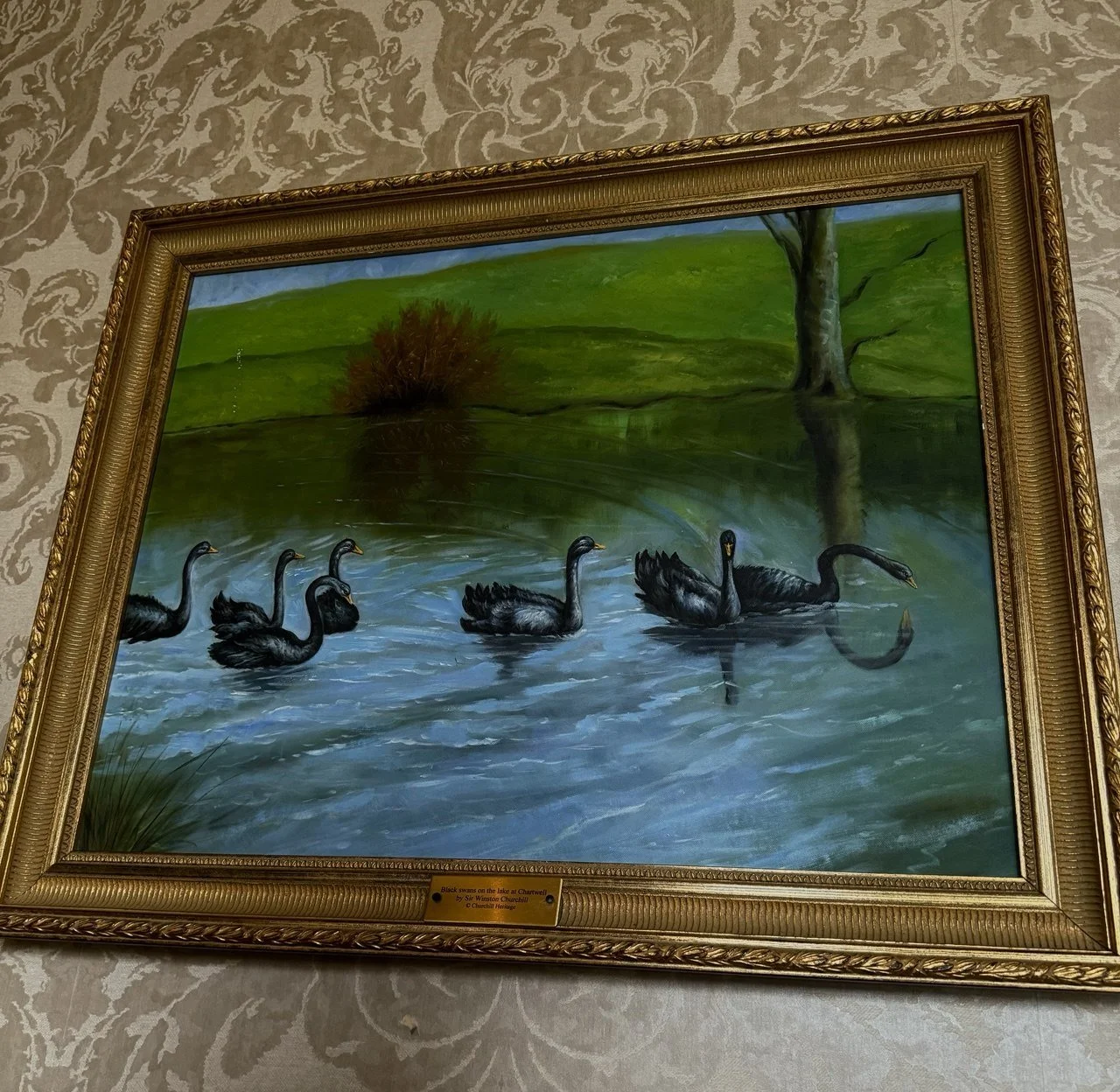
Sir Winston Churchill, installation view, Luton Hoo, 2025. Photo: Art & Butter.
A key aspect of Churchill’s artistic identity is that it exists alongside, rather than in competition with, his political legacy. His works reveal a quieter, more introspective dimension of his character. They show an individual engaged not with power or rhetoric, but with colour, composition, and the simple act of painting.
This duality is what makes Churchill particularly interesting within an art context. He challenges the idea that artistic identity must be singular or professionally defined. Instead, his practice suggests that art can function as a parallel language that does not affect career, status, or recognition.
Why now? Churchill’s paintings resonate today because they reflect a broader shift in how we think about creativity. There is growing appreciation for art not only as a profession but as a way of thinking, processing, and engaging with the world. In a culture that often prioritises productivity and specialisation, his work offers an alternative: creativity as something personal and secluded.
Biographical information sourced from Winston Churchill’s Painting as a Pastime.