
Can Art Still Resist Capitalism?
There is a persistent belief that art once stood outside the market and was guided by aesthetic ambition rather than financial logic. Today, that distance feels harder to maintain. The contemporary art world is deeply entangled with systems of value, speculation, and visibility that mirror the structures of capitalism itself. And yet, art has not stopped critiquing it. It has simply changed how.
What we once called the avant-garde is no longer a fixed style or movement. It is better understood as a position that shifts alongside the very systems it questions. Rather than opposing capitalism from the outside, much of contemporary art now operates within it, exposing its mechanisms from the inside.
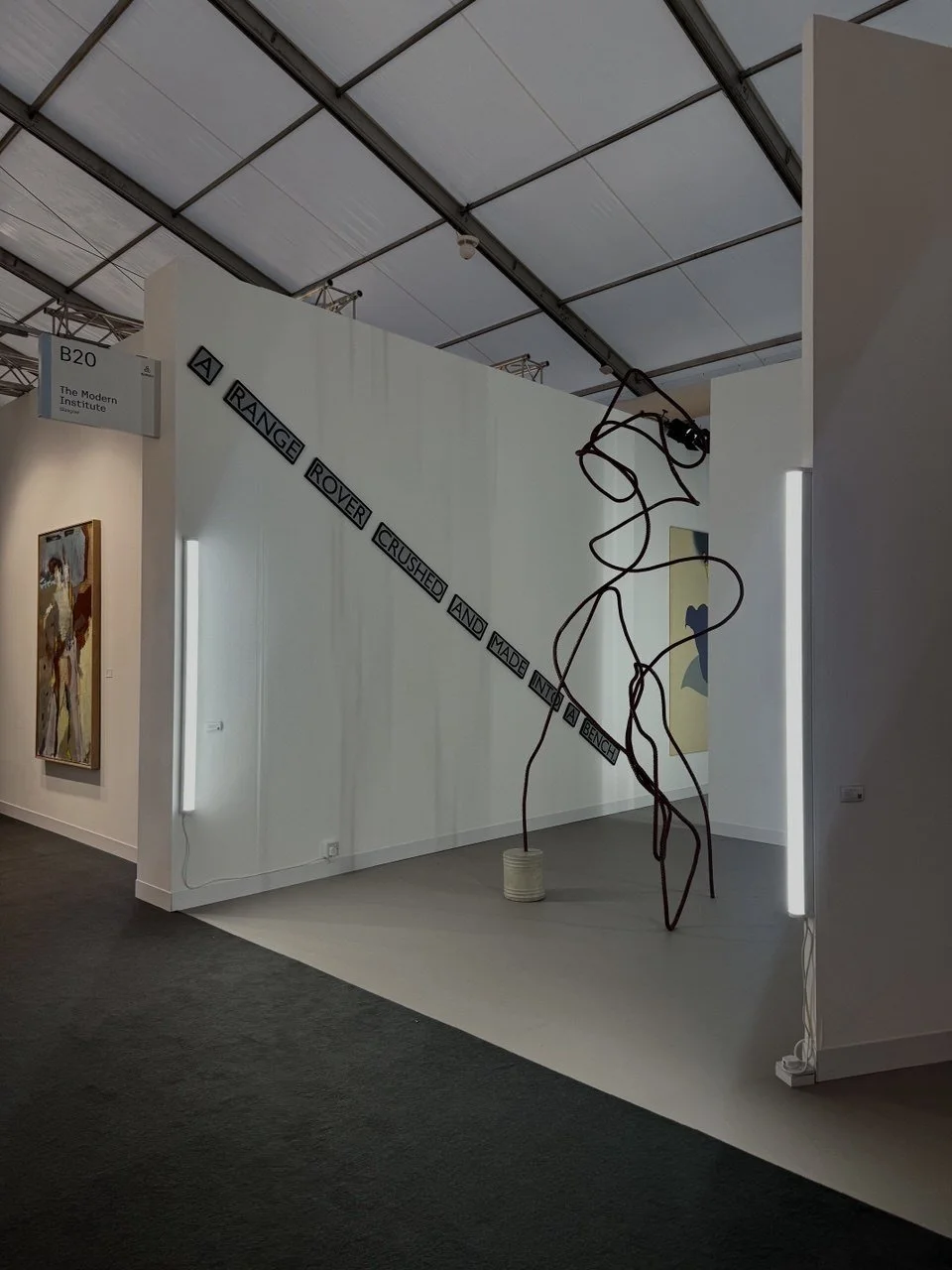
Installation view, The Modern Institute (Booth B20), Frieze London, 2025. Photo: Art & Butter.
This shift is not accidental. As cultural production became increasingly shaped by market forces, artists began to move away from traditional forms and technical mastery. The emphasis on skill gave way to ideas, participation, and systems. This so-called “deskilling” was not a loss, but a strategy, a refusal to equate value with labour in the conventional sense. If capitalism measures worth through productivity and repetition, then art responds by disrupting both.
One of the most significant transformations has been the role of the audience. Viewers are no longer passive observers but active participants. Their presence, decisions, and even bodies become part of the work itself. In this sense, art shifts attention away from mass production, where individuals are interchangeable and toward singular experience, where each person matters.
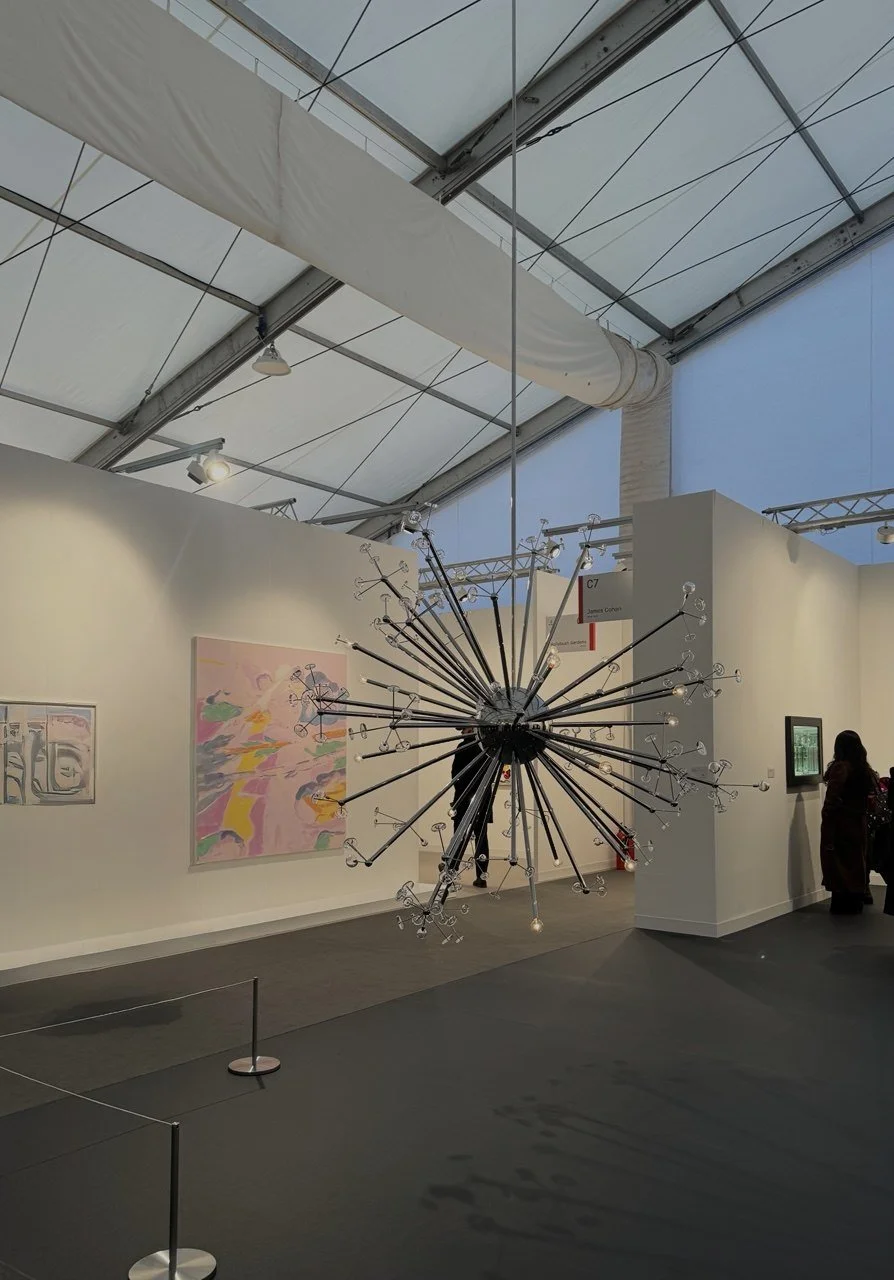
Josiah McElheny, Late Emergence II, installation view, Frieze London, 2025. Photo: Art & Butter.
At the same time, technology complicates this relationship. It is both a tool of capitalist acceleration and a medium for artistic critique. While digital systems often intensify feelings of disconnection and anxiety, art can repurpose these same technologies to create moments of presence, attention, and shared experience. Instead of isolating individuals, it brings them into relation.
This matters because capitalism not only organises economies, but it also shapes how we feel. A constant pressure to perform, produce, and optimise has created a culture of anxiety and immediacy, where the future feels uncertain, and the present is never enough. Within this context, art offers something quieter but no less important: a space to pause, to reflect, and to reconnect with a sense of meaning that is not purely economic.
Art cannot dismantle capitalism. But it can reveal its limits.
And sometimes, that is enough.