We Demand Change — What Do Politics and Art Have in Common?
Art is one of the most powerful tools of communication we have. It doesn’t require training, explanation, or permission — only the willingness to look. This is what makes art such an effective way to educate, provoke, and persuade.
Art communicates in many forms. Sometimes it speaks clearly, through imagery and narrative. Other times it works indirectly, through abstraction, symbolism, and emotion. In both cases, it has the ability to reveal inequality, expose injustice, and reflect the social and political conditions of its time.
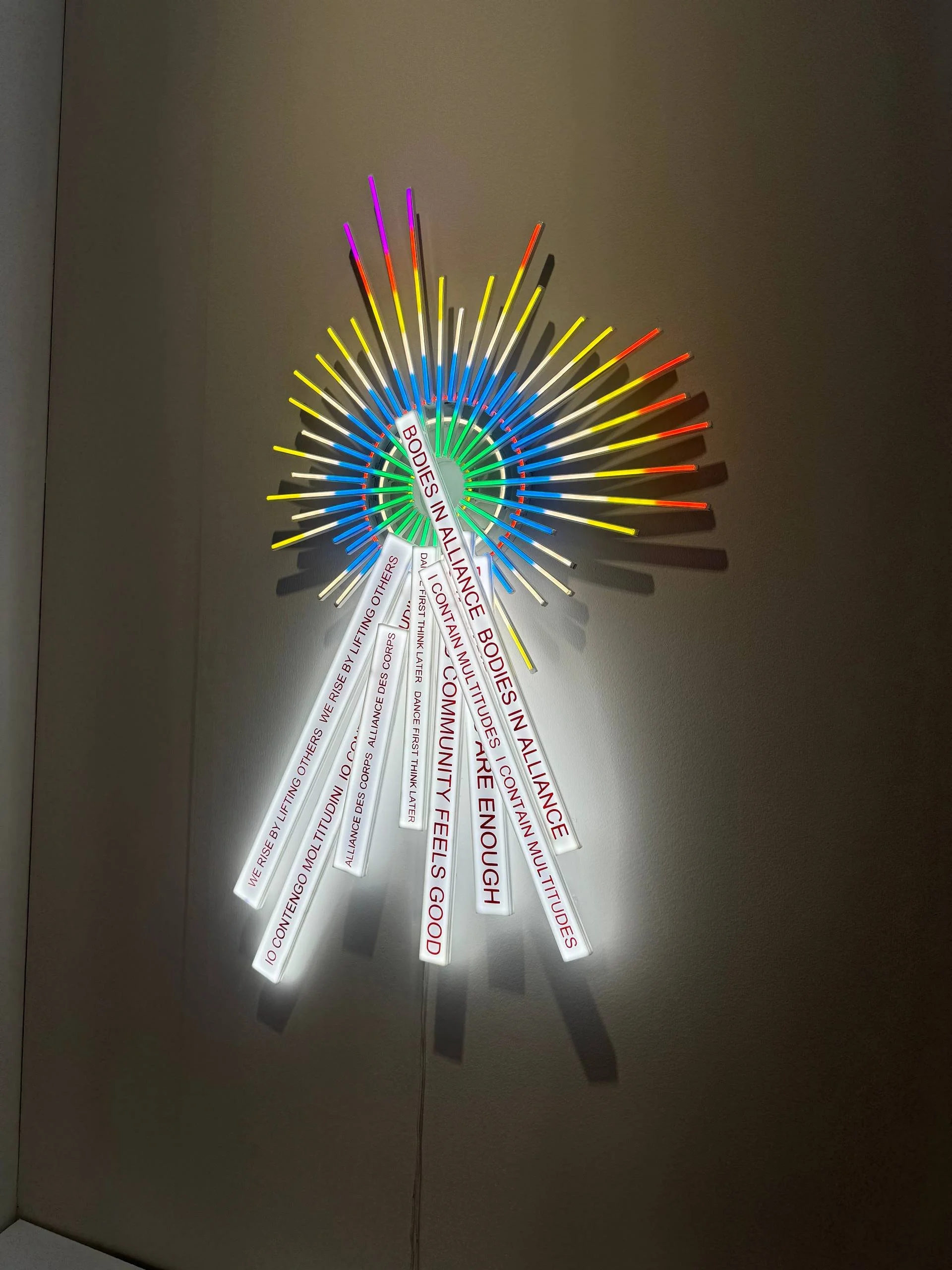
Marinella Senatore, Luminaria and Neon (series), Art Basel Paris, 2025. Photo: Art & Butter.
Because of this, art and politics have always been inseparable. Throughout history, imagery has been used to influence, control, and mobilise — from propaganda and monuments to posters, murals, and digital culture. Visual language has the power to shape opinion, often before we are even aware of it.
This is why art invites responsibility. It asks us not only to observe, but to question. To consider other perspectives. To recognise when we are being moved — and why. In a world saturated with images, learning to read visual language is a political act in itself.
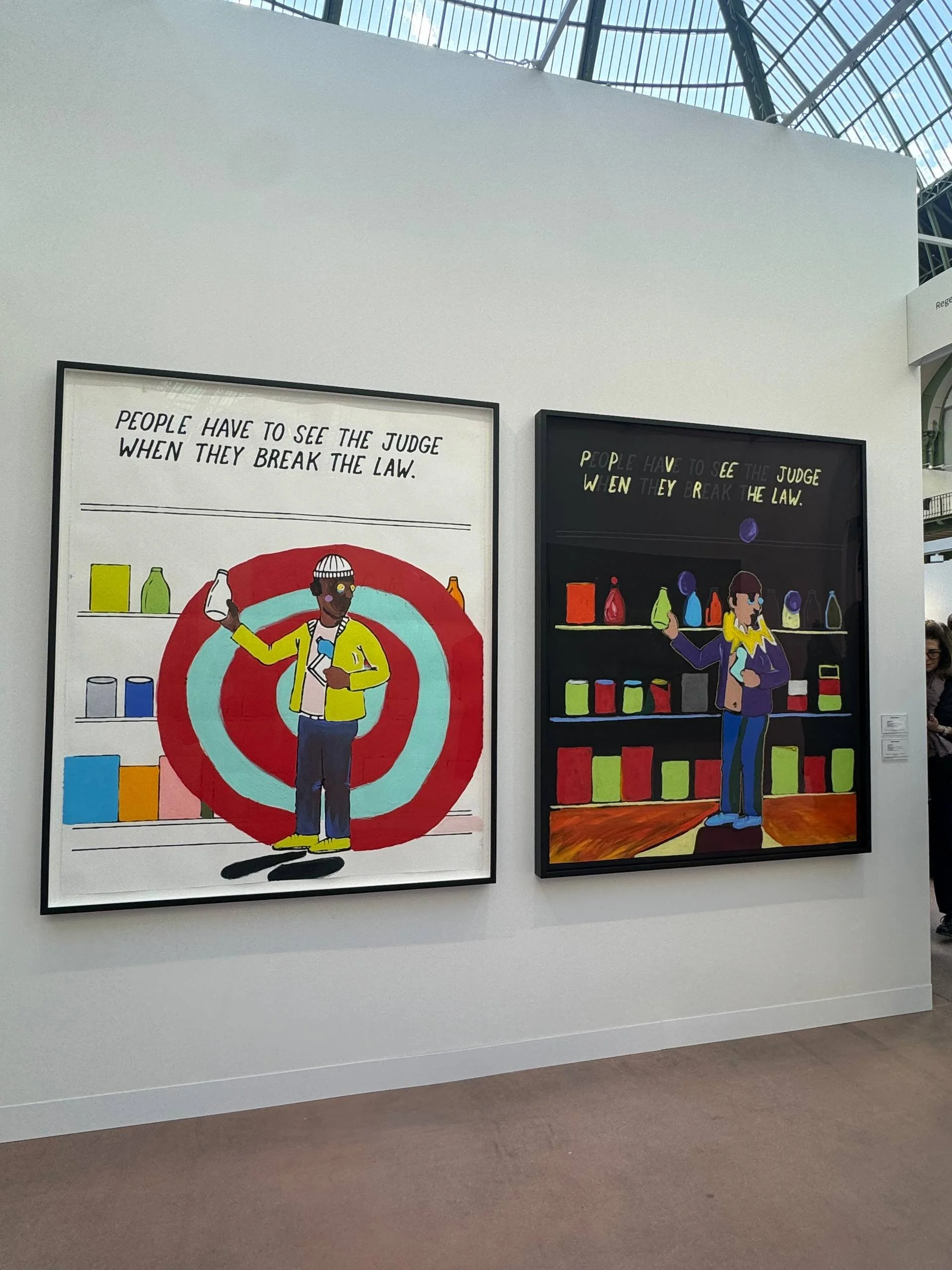
Sable Elyse Smith, Coloring Book (2023), Art Basel Paris, 2025. Photo: Art & Butter.
At its most direct, art becomes activism. Artists use protest, performance, and public intervention to draw attention to urgent social and political issues, turning spectators into participants. The message is not always comfortable, but it is rarely accidental.
To make art, to share an opinion, to choose what to show or hide — these are all political gestures. The personal is political, and art makes that relationship visible.
Art does not exist outside the world — it responds to it. And when change is demanded, art is often where that demand first takes shape.