
Public Art — or Another Statue for Someone Famous?
The greatest power of public art is its visibility. It belongs to everyone, and because of that, it shapes how we see ourselves, often without us noticing. From ancient civilisations to contemporary cities, societies have always filled public spaces with images of what they value.
The Romans decorated temples with gods and heroes. Egyptian pharaohs built monuments designed to outlive them. These works were not simply decorative, they were statements of power, belief, and identity. Public art has always been a way of saying: this matters enough to be seen by all.
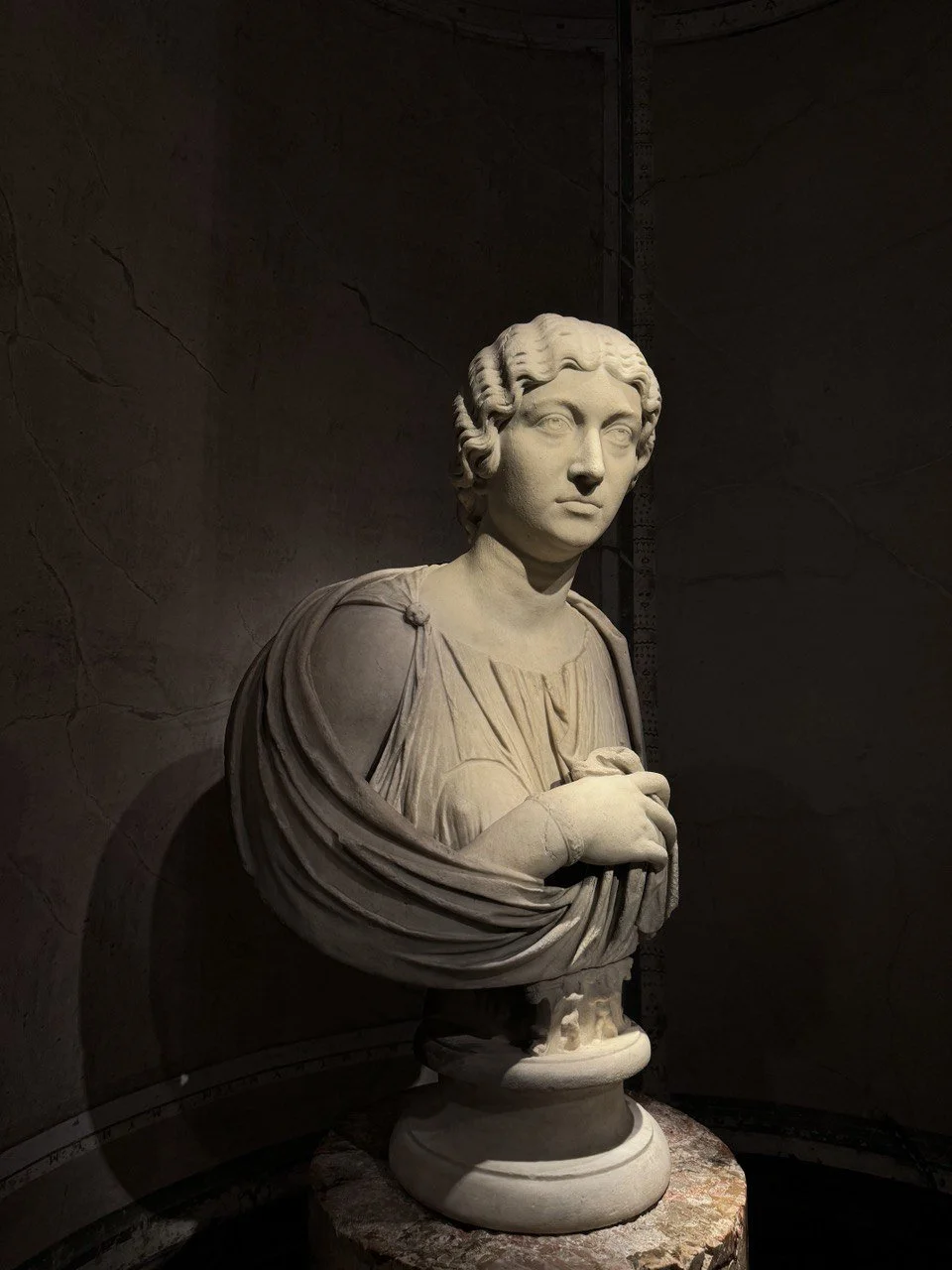
Portrait Bust of Roman Empress Annia Aurelia Galeria Lucilla, (2nd century CE.), installation view, TEFAF Maastricht, 2025. Photo: Art & Butter.
But what is the purpose of looking at the same object every day? Why do we surround ourselves with monuments, murals, and sculptures that we eventually stop noticing?
Public art reflects who we are or who we think we are. It records collective values, historical priorities, and cultural ideals, often more clearly than books or archives. It also connects time: it shows us what we were, what we are, and what we hope to become. In this way, public art is not just visual but a social memory.
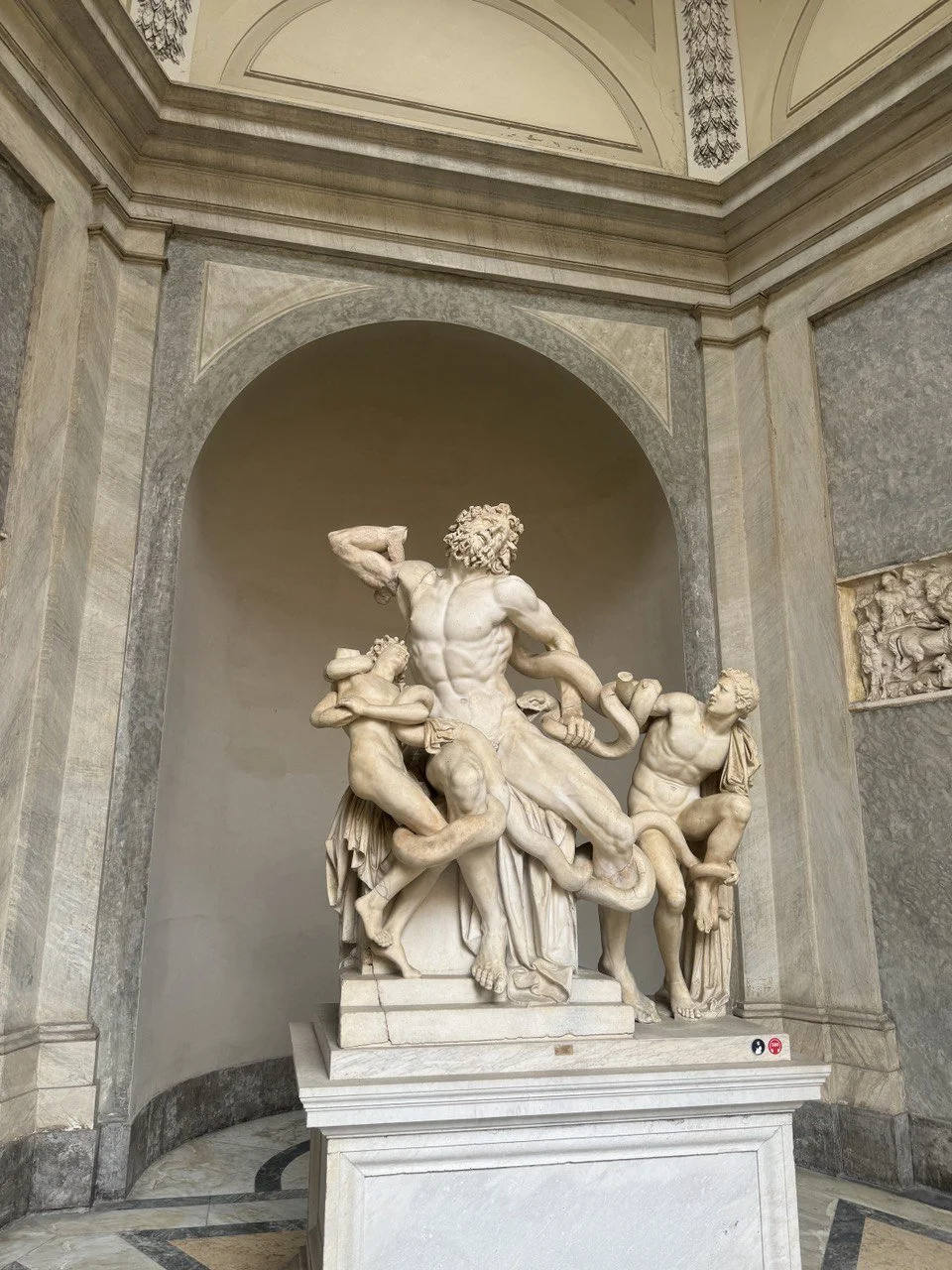
Laocoön and His Sons, (1st century BCE–1st century CE.), installation view, Vatican Museums, Vatican City. Photo: Art & Butter.
One of the most interesting aspects of public art is that it doesn’t always come from institutions. Banksy’s work, for example, exists outside permission and legality, yet it functions as a public service. Though technically vandalism, his interventions force reflection on war, politics, inequality, and power. The illegality becomes secondary to the conversation it creates.
Most public art, however, is commissioned, often to honour history, mark a place, or commemorate individuals. And it is precisely here that tensions have grown. Since 2020, monuments have become sites of debate rather than passive decoration. For example, the removal of statues during the Black Lives Matter protests exposed a long-standing imbalance: whose lives are remembered, and whose are erased.
This has raised difficult questions. Should controversial monuments be removed entirely? Should they be relocated to museums and given historical context? Or should they remain, reframed, and challenged and accompanied by new monuments that tell different stories?
Public art is no longer neutral. It is a mirror, and sometimes a confrontation. What we choose to keep, remove, or add says less about the past than it does about the present.
Public art is not just about who we honour, but about who we listen to. The real question is no longer what should stand— but what we are ready to see