
Alison Friend
Period - Ultra-Contemporary
Context - British figurative painting drawing on still life traditions and popular culture
Cultural Signal - Reimagining classical painting through humour, animals, and everyday objects
Medium - Oil painting
Language - Anthropomorphic animals, rich colour, playful symbolism, narrative still life
British painter Alison Friend is known for her distinctive paintings featuring animals, most often dogs and cats, placed within carefully constructed still-life environments. At first glance, her works appear humorous and light-hearted, but theyare rooted in a deep engagement with the traditions of classical painting.
Working primarily in oil, Friend builds compositions filled with rich textures, saturated colour, and symbolic objects. Books, fruit, wine glasses, and decorative fabrics frequently appear alongside her animal protagonists. These arrangements echo the structure of traditional still life painting, yet the presence of expressive animals introduces a sense of personality and narrative, adding a hint of personification.
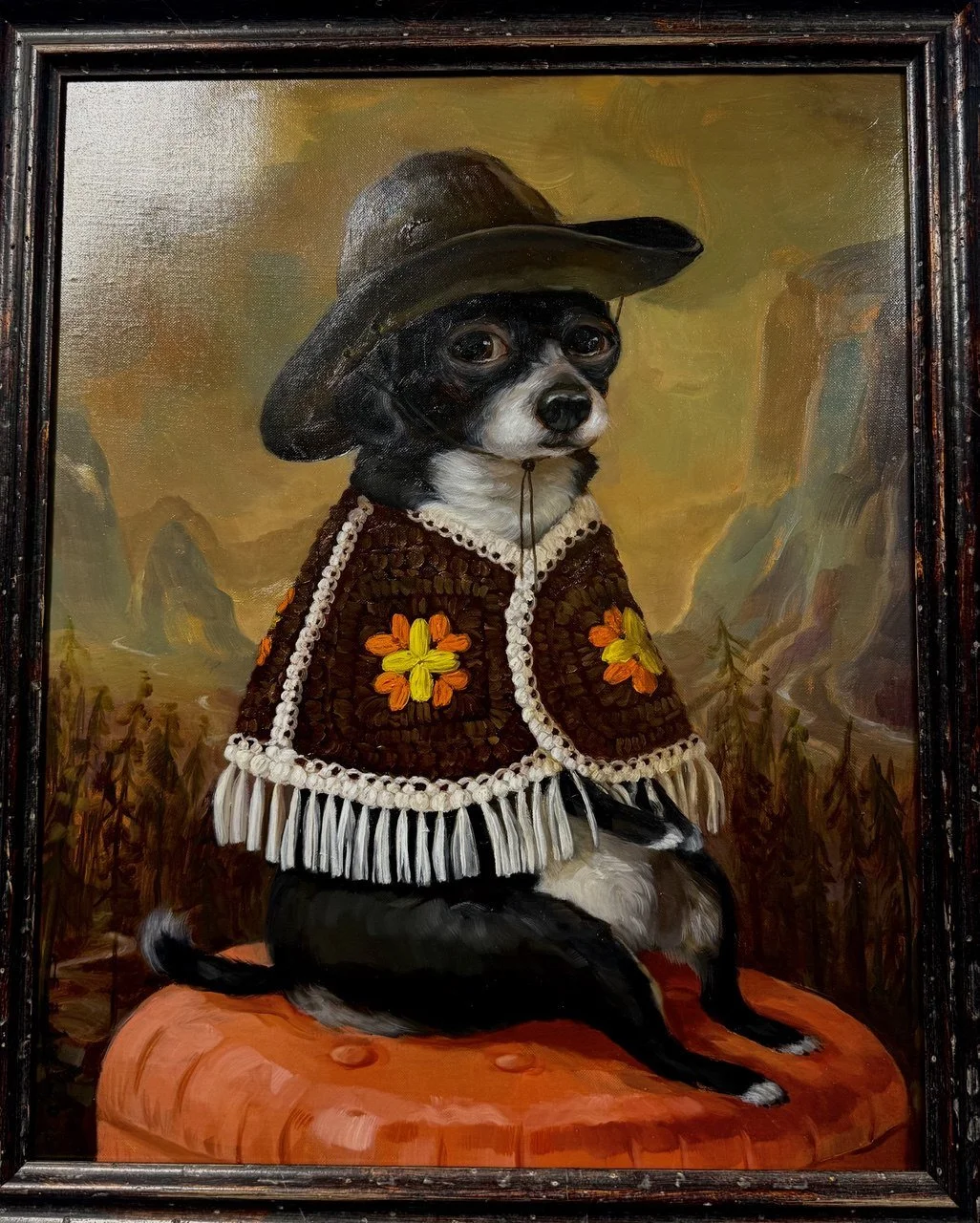
Alison Friend, Chiquito Pero Picoso (2026), installation view, British Art Fair, 2026. Photo: Art & Butter.
A defining feature of Friend’s practice is her use of anthropomorphism. The animals in her paintings often display recognisable human emotions such as curiosity, pride, boredom, or quiet contemplation. Through subtle gestures and carefully observed expressions, these figures begin to feel almost like portraits.
This approach allows Friend to explore themes of identity, domestic life, and contemporary culture while maintaining a playful tone. The animals function as both characters and mirrors, reflecting familiar aspects of human behaviour in unexpected ways.
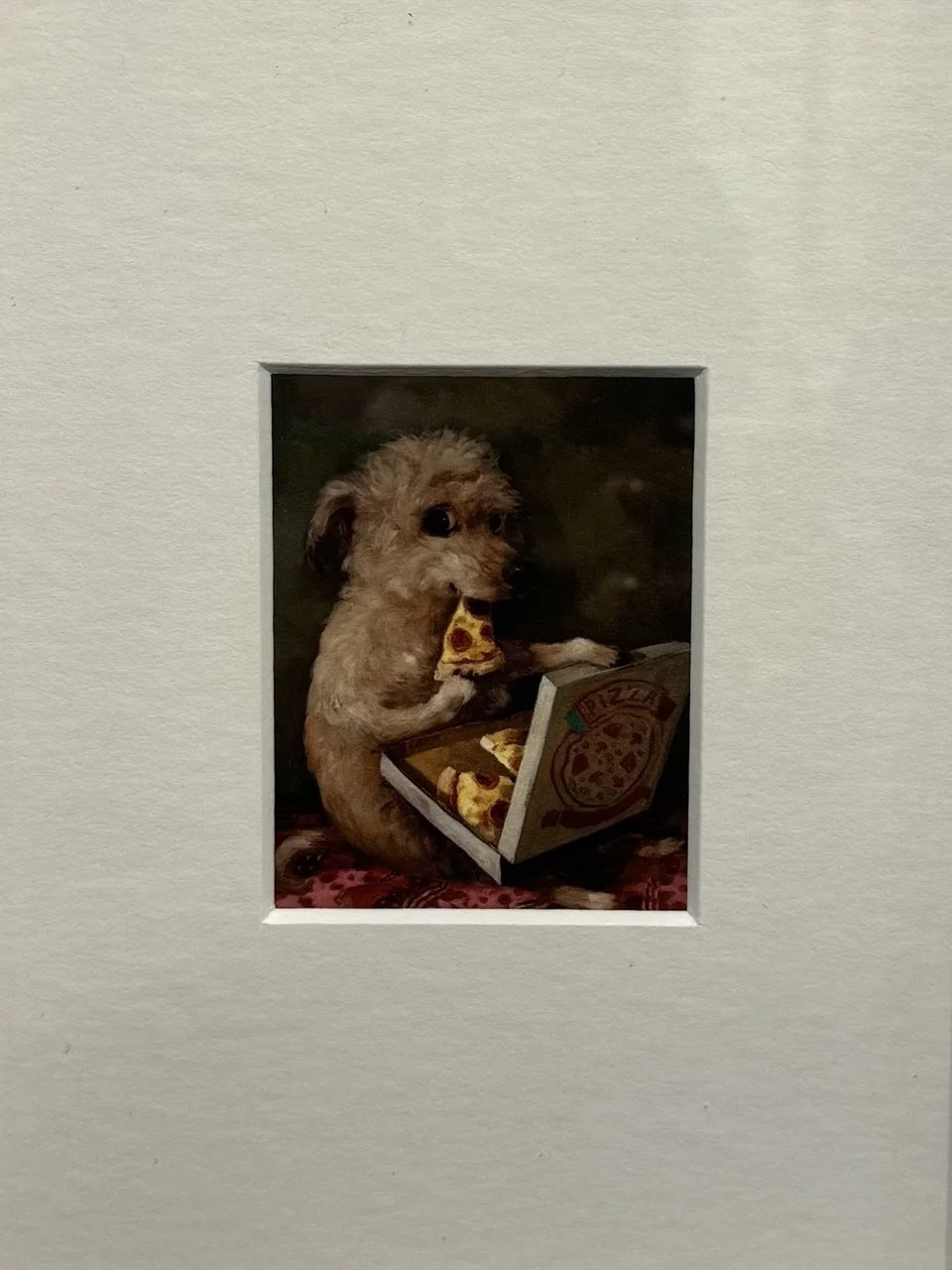
Alison Friend, Pizza Lover (2024), installation view, British Art Fair, 2026. Photo: Art & Butter.
Despite their humour, the paintings demonstrate strong technical control. Friend’s careful use of lighting, composition, and colour reflects an awareness of historical painting traditions, particularly European still life and portraiture. By blending these references with contemporary subject matter, she creates works that feel both familiar and refreshingly modern.
Why now? Friend’s work reflects a broader return to figurative and narrative painting within contemporary art. Audiences increasingly gravitate toward works that balance visual sophistication with emotional accessibility. By combining painterly tradition with humour and storytelling, Alison Friend shows how classical techniques can be reinterpreted for a contemporary audience.
Biographical information sourced from the artist’s official website.