Rose Wylie
Period - Contemporary
Context - British figurative painting beyond academic conventions
Cultural Signal - Reclaiming painting through play, memory, and visual intuition
Medium - Large-scale painting
Language - Childlike figuration, repetition of motifs, visual storytelling
Rose Wylie has become known for her vibrant, expansive compositions that at first glance appear simple, almost naïve. Yet beneath their playful surfaces lies a complex investigation of visual representation and narrative construction.
Working primarily on large-scale canvases, Wylie often juxtaposes seemingly unrelated images such as figures, animals, fragments of film scenes, or everyday observations. These elements form visual rhymes across the canvas, creating compositions that unfold through repetition, variation, and association rather than through conventional perspective.
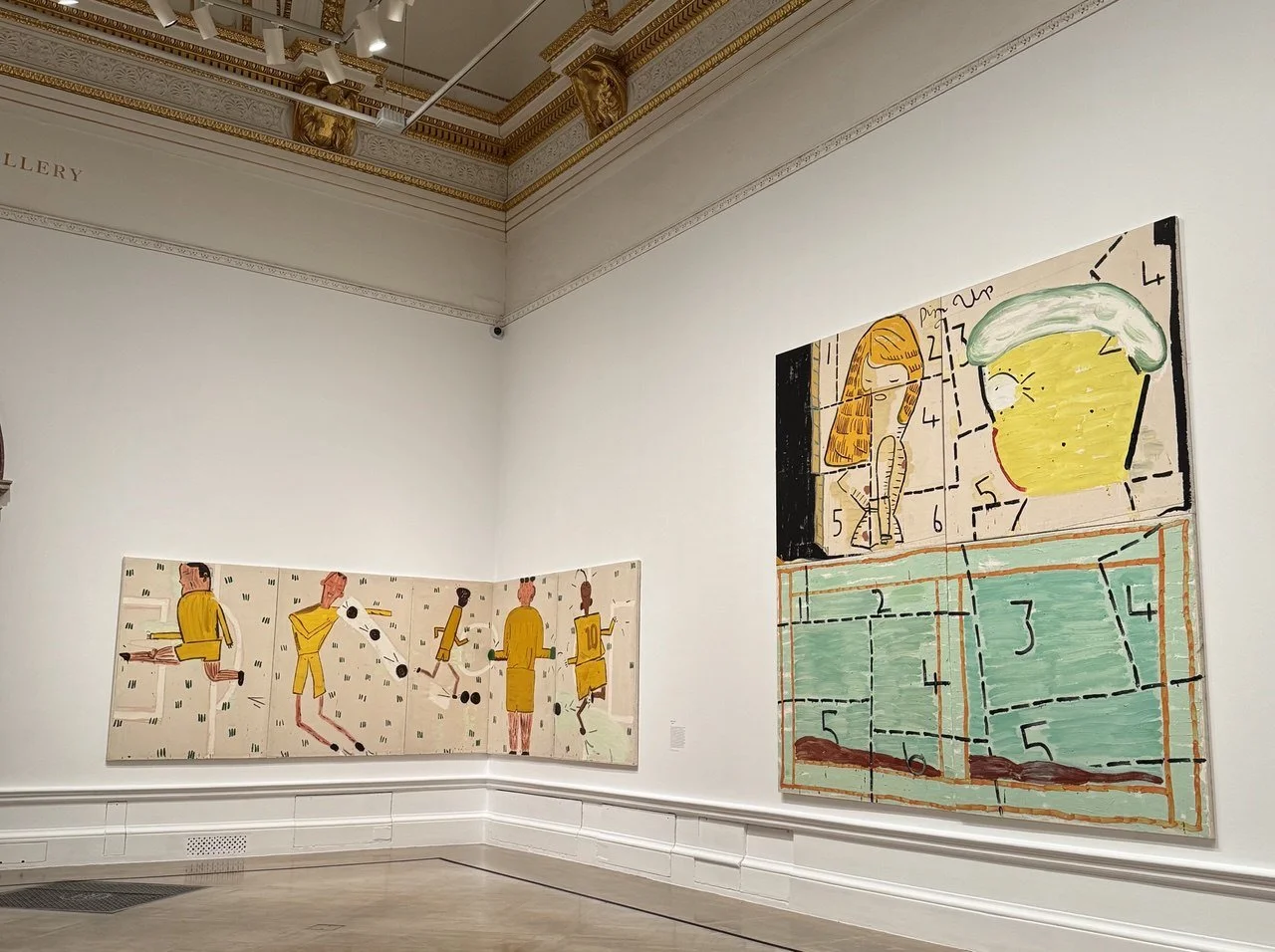
Rose Wylie, The Picture Comes First, installation view, Royal Academy of Arts, 2026. Photo: Art & Butter.
Wylie has long been interested in exploring alternatives to traditional Renaissance composition. Instead of relying on strict spatial logic, she allows imagery to accumulate freely, building layered visual relationships that feel intuitive rather than academic.
Her paintings frequently revisit the same motifs across multiple works, treating repetition as a method of investigation. Through this process, images evolve gradually, revealing how memory, observation, and imagination shape visual language.
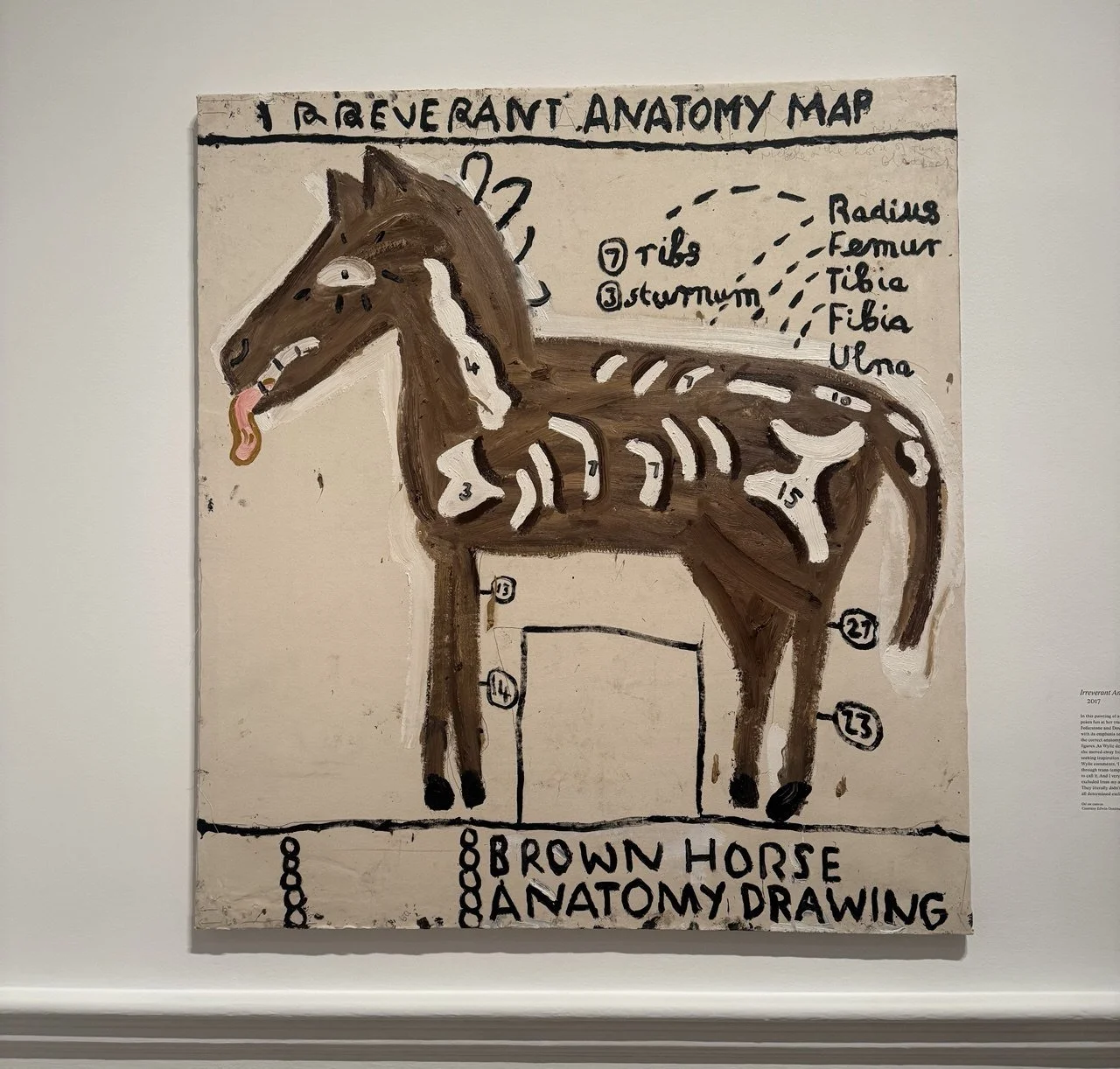
Rose Wylie, Irreverent Anatomy Map (2017), installation view, Royal Academy of Arts, 2026. Photo: Art & Butter.
Despite the apparent looseness of her style, Wylie’s paintings are carefully constructed. Their scale, rhythm, and compositional balance demonstrate a deep engagement with the history of painting while simultaneously resisting its conventions.
Why now? Wylie represents a broader shift in contemporary painting: a move away from technical perfection toward expressive freedom. Her work reminds us that painting can still be a space of experimentation, where humour, memory, and intuition coexist with serious formal inquiry.
Biographical information sourced from the artist’s gallery representation at David Zwirner.