
How to Build Your Own Art Collection
Collecting art is often seen as something reserved for experts or the wealthy, but in reality, anyone can become a collector. Living with art can inspire new ways of thinking, reflect your personality, and create a deeper connection with culture. Building a collection is not about spending large sums of money — it is about discovering works that genuinely resonate with you.
How to Discover Art
One of the best ways to begin learning about art is through the artists themselves. Collect books by artists you admire, study their work, and read interviews, essays, and exhibition catalogues. Over time, you will start to notice recurring themes, styles, and ideas that appeal to you.
Art fairs are another excellent place to discover new artists. You do not need to arrive with a clear idea of what you want to buy. Instead, use the experience as an opportunity to explore, learn, and observe. Take photographs and make notes about works that capture your attention. Pro tip: The photographs you take can become your own digital collection, helping you track your evolving interests over time.
Museums and galleries are equally important. By regularly looking at art, you naturally begin to understand what you enjoy and what does not resonate with you. Developing your eye takes time, and there is no substitute for seeing art in person.
When you eventually decide to purchase a work, buy it because you genuinely love it. Avoid making decisions based solely on potential financial returns or investment value. If you buy art that you enjoy living with, your purchase will always have meaning, regardless of future market performance.
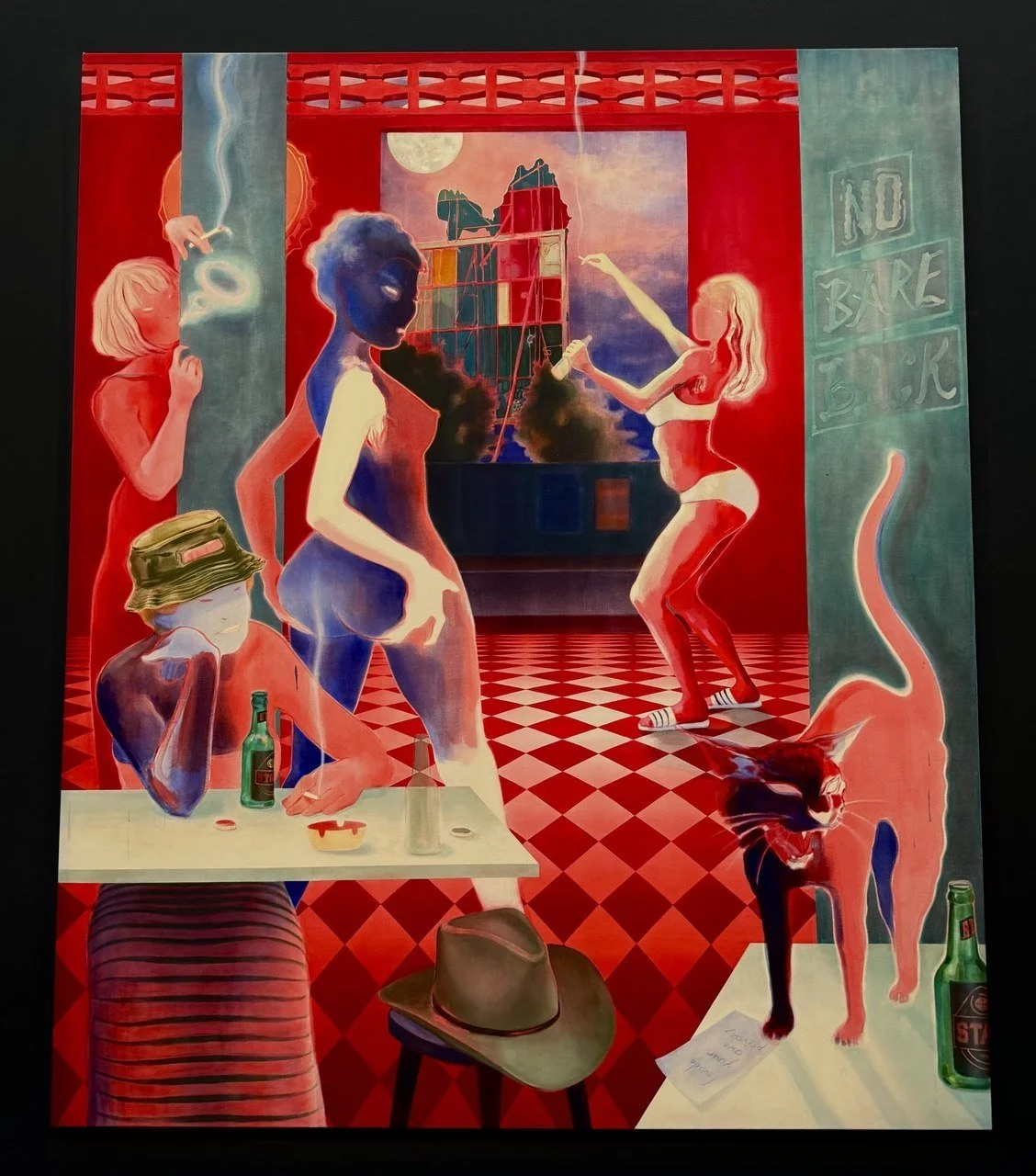
Lisa Brice, After Embah (2018), installation view, Sotheby's London, 2025. Photo: Art & Butter.
Where to Buy Art
Graduate exhibitions are one of the best places to begin collecting. They often offer affordable works, provide an opportunity to discover emerging talent, and allow you to meet artists at the start of their careers. Building relationships with artists can be one of the most rewarding aspects of collecting.
Digital platforms and social media, particularly Instagram, have made art more accessible than ever before. Beyond providing opportunities to purchase work directly, these platforms are valuable learning resources and offer access to a global community of artists, galleries, and collectors.
Museum and gallery shops are also worth exploring. Many offer artist-made editions, prints, books, and multiples that can be purchased at accessible price points. These works can be a great way to begin a collection while supporting artists and institutions.
Auction houses should not be overlooked. Most major auction houses publish their catalogues online, allowing collectors to research upcoming sales and discover artists. While auctions may seem intimidating, they can occasionally provide opportunities to acquire works at reasonable prices.
Finally, galleries, museums, and art fairs should remain central to your collecting journey. Even if you are not buying immediately, they are invaluable places for learning, discovering, and refining your taste.

Sonia Payes and Yi Hui, Landscapes of Being (2026), installation view, Photo London, 2026. Photo: Art & Butter.
Rules for Buying Art
Before making purchases, establish your own collecting principles. Consider setting a budget or focusing on a particular theme, medium, artist, or area of interest. Having clear guidelines can make collecting more enjoyable and help you make confident decisions.
If you are purchasing works on the secondary market, always review the condition report carefully. The condition of a work can significantly affect its value, and whenever possible, it is best to acquire works that have been well preserved.
Framing is another important consideration. Good framing protects a work while enhancing its presentation. Although professional framing can be expensive, using quality materials is an investment in the long-term preservation of your collection.
Insurance should also be considered, particularly as your collection grows. Works can be damaged during transport, framing, or installation, and adequate insurance helps protect your investment. If a work is being framed, check whether it remains covered under your policy or whether the framer's insurance applies.
Finally, remember that great art is not always immediately recognised. Some artists and artworks take years to receive wider attention and appreciation. Building a collection requires patience. Never view a purchase as a wasted opportunity simply because recognition has not arrived yet.
Collecting art is ultimately a personal journey. The most meaningful collections are not necessarily the most expensive, but those built with curiosity, passion, and a genuine connection to the works they contain.
Based on Robert Diament & Russell Tovey’s Talk Art