Symbols as a Way of Interpreting Art (Part 1): Land, Sky and the Elements
Symbols offer one of the most useful ways of interpreting art. Across cultures, natural elements such as water, mountains, clouds, lightning, the moon, the sun and fire have been used to express ideas about life, spirituality, power and the divine. Here we propose a short explanation of each.
Mountains
Mountains have long been associated with the sacred because they were seen as the closest point between earth and heaven. From Mount Olympus in Greek mythology to the sacred peaks of Daoist tradition, mountains often symbolise spiritual elevation, revelation and a connection to the divine.
Clouds
Clouds are frequently linked to fertility, prosperity and divine presence. In religious art, they often surround heavenly figures, while in East Asian traditions, clouds and dragons symbolise life-giving rain and abundance.
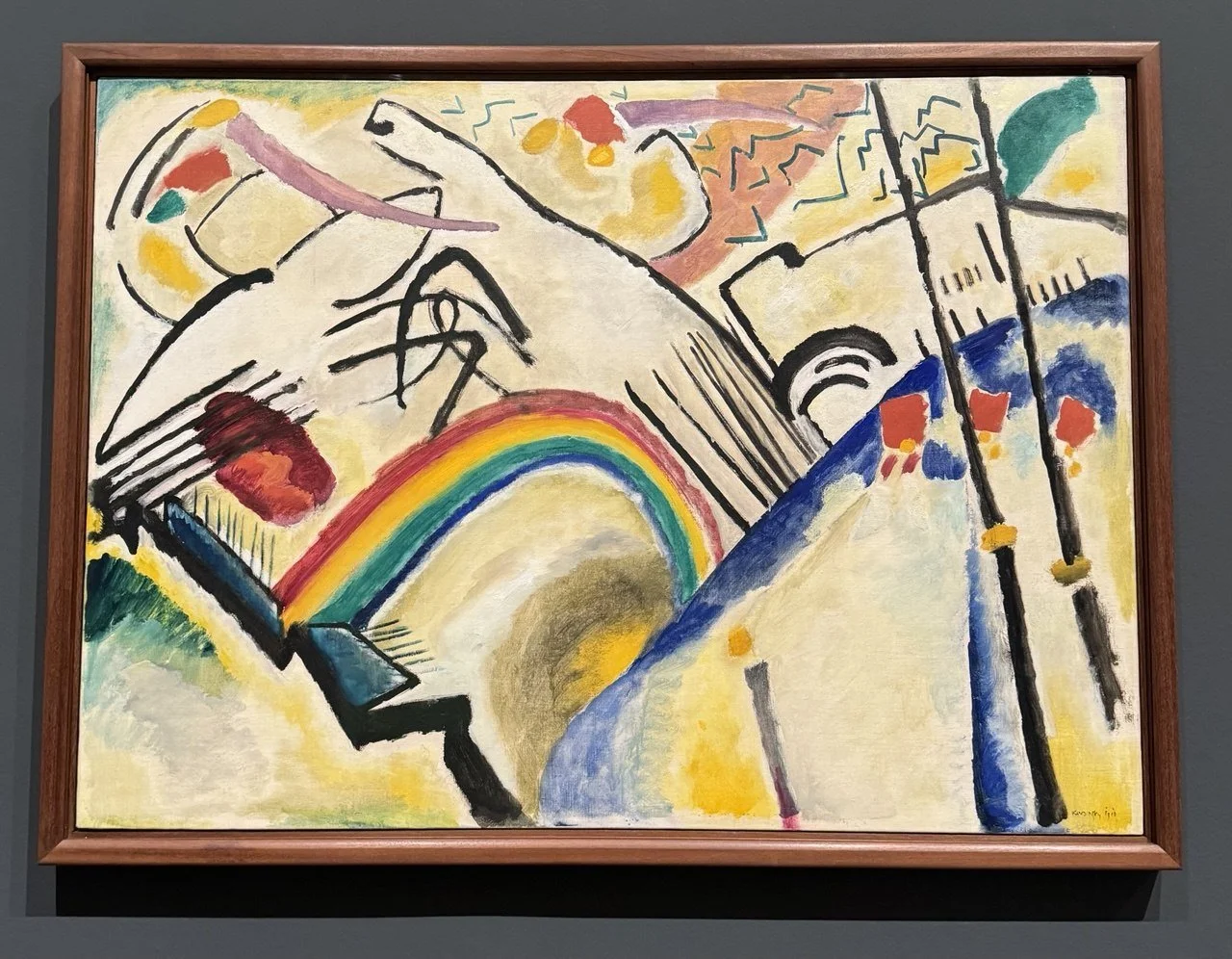
Wassily Kandinsky, Cossacks (1910-1911), installation view, Tate Modern, 2024. Photo: Art & Butter.
Rainbows
Rainbows are commonly seen as bridges between the earthly and divine realms. In the Bible, they symbolise God's covenant with humanity, while in Greco-Roman mythology, they are associated with Iris, the messenger of the gods. Their rarity has also made them symbols of hope and good fortune.
Lightning
Lightning often represents divine power, judgment, and revelation. Thunderbolts are associated with gods such as Zeus, Jupiter and Indra, making lightning a symbol of authority, transformation and supernatural intervention.
The Moon
The moon is widely associated with femininity, intuition and cyclical change. It appears in many traditions as a symbol of mystery, nature and the rhythms of life, and in Chinese philosophy it embodies the feminine principle of yin.

Jihyoung Han, A Woman’s Woman (2024), installation view, No.9 Cork Street, 2024. Photo: Art & Butter.
The Sun
The sun traditionally symbolises vitality, truth, authority and divine power. Solar imagery appears throughout world cultures and religions, often representing life-giving energy, kingship and masculine yang energy.
Fire
Fire symbolises both destruction and renewal. Across cultures, it is associated with purification, sacrifice and transformation. Its ability to create and destroy makes it one of the most powerful and enduring symbols in art.
By recognising these recurring symbols, we can move beyond what an artwork depicts and begin to understand the deeper ideas, beliefs and values it was created to express.
Based on Matthew Wilson’s Symbols in Art