
Symbols as a Way of Interpreting Art (Part 2): Meanings in Hidden Nature
Plants have carried symbolic meanings across cultures for centuries. Artists often use flowers, trees and vines not simply as decorative elements, but as visual shorthand for ideas such as love, purity, immortality, sacrifice and spiritual enlightenment. Understanding these symbols allows us to uncover deeper layers of meaning within an artwork. Inspired by examples from art history, here are some of the most enduring plant symbols that can be found in art.
Carnation
Carnations are commonly associated with love, marriage and devotion. In Christian art, they are linked to the Virgin Mary and maternal compassion, while in Chinese culture, they often appear as symbols of marriage and good fortune. Artists frequently use carnations to suggest affection, fidelity or family bonds.
Cypress
The cypress carries a dual meaning of immortality and death. Because it remains evergreen throughout the year, it has become a symbol of longevity across many cultures. At the same time, its association with cemeteries and funerary traditions has made it a powerful symbol of remembrance, mourning and the afterlife.
Laurel
The laurel wreath is one of the oldest symbols of achievement and honour. Associated with Apollo in Greek mythology, it traditionally represents victory, excellence, wisdom and artistic accomplishment. Laurels often appear in portraits to celebrate intellectual or creative success.
Lily
Lilies are widely recognised as symbols of purity, innocence and spiritual grace. In Christian art, they are closely connected to the Virgin Mary and frequently appear in scenes of the Annunciation. Their white petals have made them enduring symbols of virtue and divine purity.
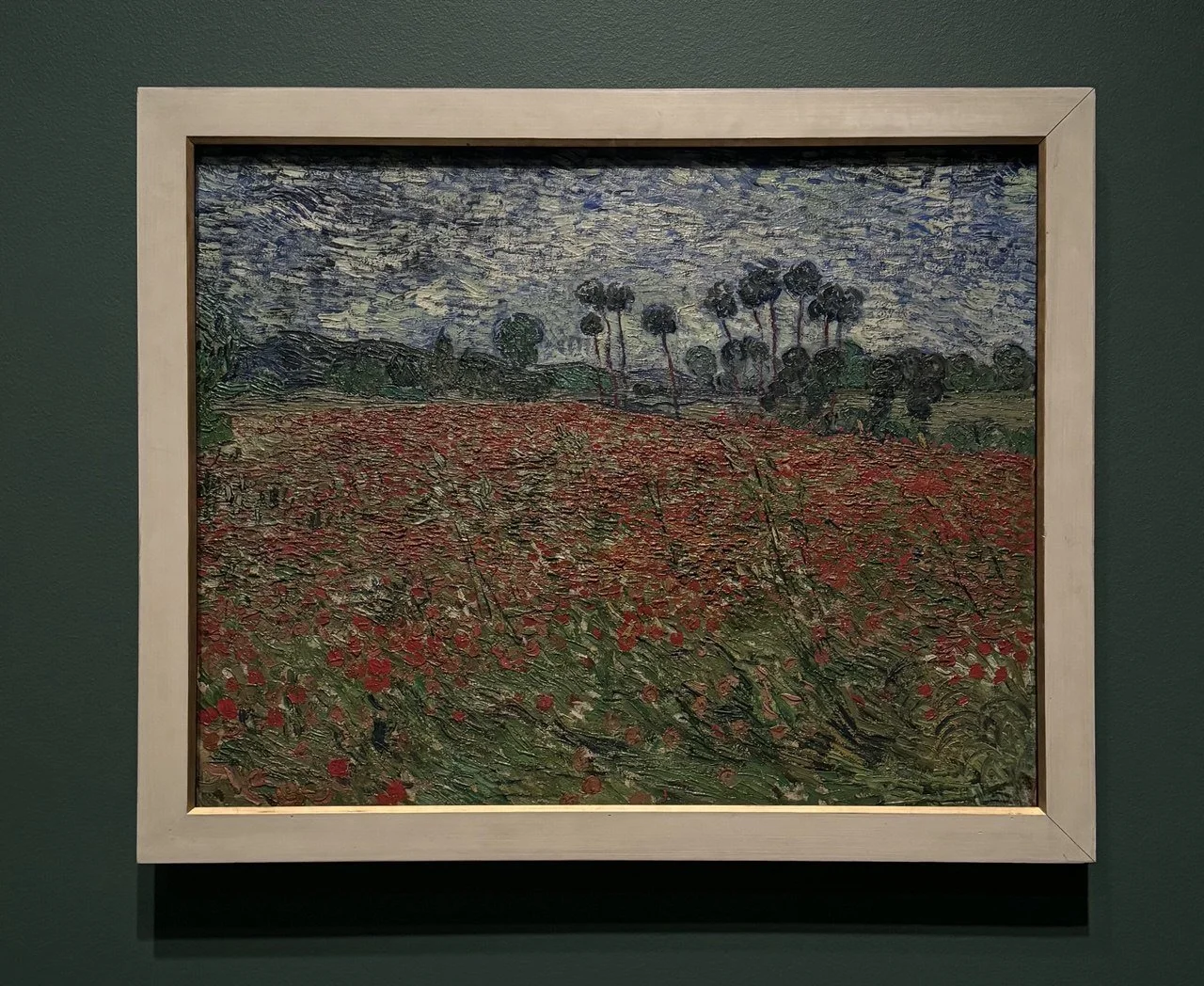
Vincent van Gogh, Poppy Field (1890), installation view, Royal Academy of Arts, 2025. Photo: Art & Butter.
Lotus
The lotus is one of the most important symbols in Asian art and religion. Rising from muddy water yet blooming untouched on the surface, it symbolises spiritual enlightenment, purity and transcendence. In both Hinduism and Buddhism, the lotus represents the journey from earthly existence toward higher understanding.
Palm
Palm branches traditionally symbolise victory, eternal life and spiritual triumph. In Christian art, they are associated with martyrdom and resurrection, while earlier cultures linked them to fertility, prosperity and endurance. The palm often represents the victory of life over death.
Grapevine
The grapevine has long symbolised abundance, fertility and renewal. In classical mythology, it is associated with Dionysus, the god of wine, while in Christian art, it represents Christ and the connection between the divine and humanity. Vines can also signify friendship, unity and spiritual nourishment.
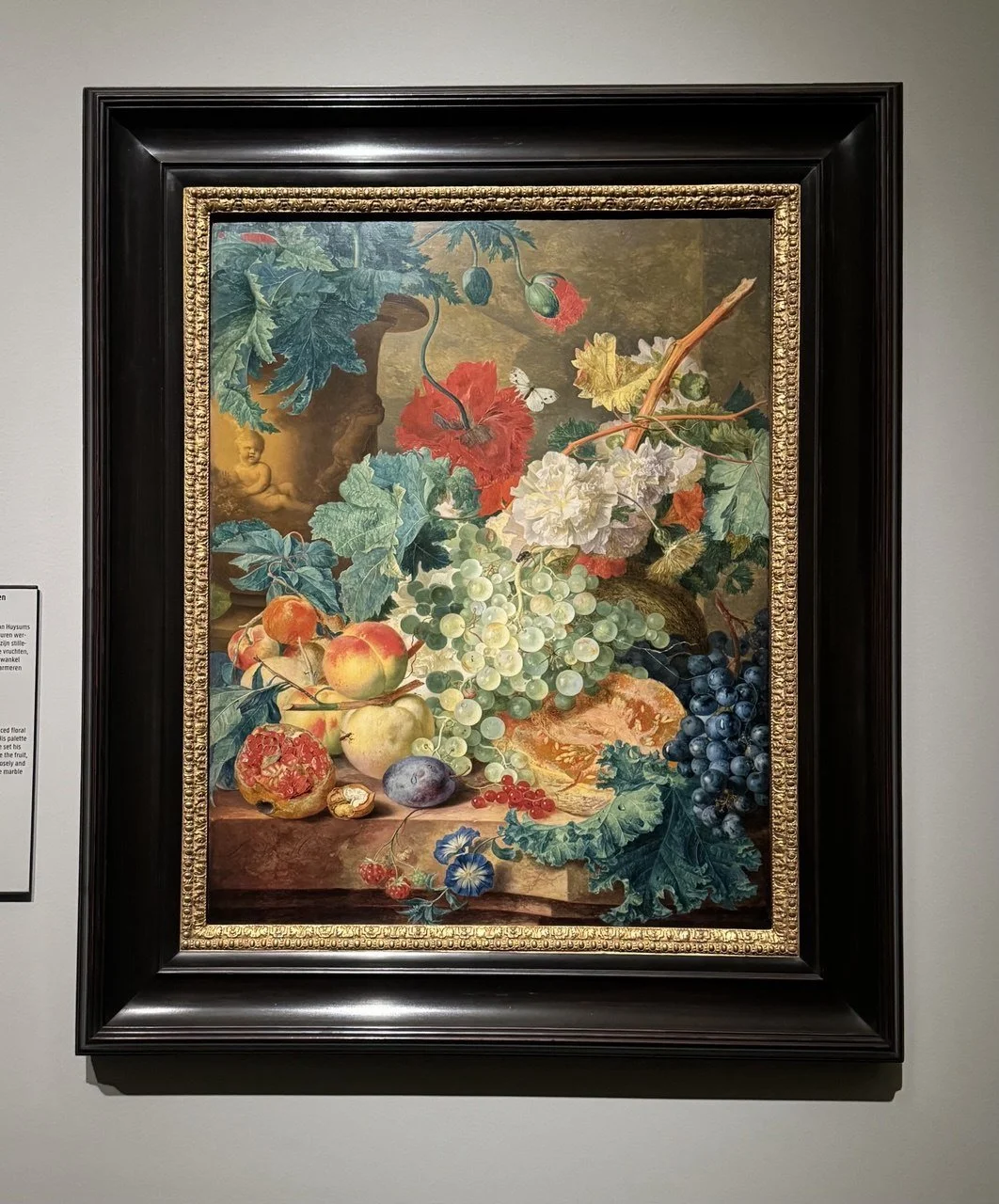
Jan van Huysum, Still Life with Flowers and Fruit (c. 1728), installation view, Rijksmuseum, 2024. Photo: Art & Butter.
Poppy
Poppies are often associated with sleep, remembrance and mortality. Their connection to opium led many cultures to view them as symbols of dreams and death. In Christian imagery, however, their vivid red colour can also reference sacrifice and the blood of Christ.
Sunflower
Sunflowers symbolise devotion, loyalty and admiration. Their tendency to turn towards the sun made them powerful emblems of faithfulness and constancy. Artists have also used them to represent optimism, vitality and the pursuit of enlightenment.
By recognising these recurring plant symbols, we can begin to see how artists communicate ideas beyond the visible image. What may appear to be a simple flower or tree often carries centuries of cultural, religious and symbolic meaning waiting to be discovered.
Based on Matthew Wilson’s Symbols in Art