The Stolen Cézanne: What Happens When a Masterpiece Disappears?
A story of theft, organised crime, provenance, and one very valuable painting
When we think about art theft, we often imagine dramatic museum heists and masked criminals disappearing into the night with priceless masterpieces. Yet the theft itself is often only the beginning of the story. Recovering a stolen artwork can be far more complicated than finding it.
One of the most fascinating examples is the story of Paul Cézanne's Bouilloire et Fruits (1888–90), which disappeared from a private American collection and resurfaced more than twenty years later through a chain of anonymous intermediaries, lawyers, investigators, and art market specialists.
More than a crime story, this case offers a rare glimpse into the hidden mechanisms that help protect the art market and cultural heritage.
The Theft
The story begins in 1978 at the home of Michael and Doris Bakwin in Massachusetts, USA. Seven paintings were stolen from their dining room, including works by Paul Cézanne, Chaïm Soutine, Jean Jansem, Maurice Utrillo, and Maurice de Vlaminck. What made the theft particularly unusual was the absence of any sign of forced entry. With no broken windows or damaged doors, suspicion quickly fell on individuals who may have had access to the house. Despite investigations and several promising leads, the case remained unsolved. At one point, the FBI focused on a local firearms dealer suspected of being involved in illicit activities. An undercover officer working on the case discovered that the man had previously offered artworks matching the description of the stolen paintings. Before the investigation could progress further, however, the suspect was killed during a dispute over an unpaid poker debt. The trail went cold. For more than twenty years, the paintings simply disappeared.
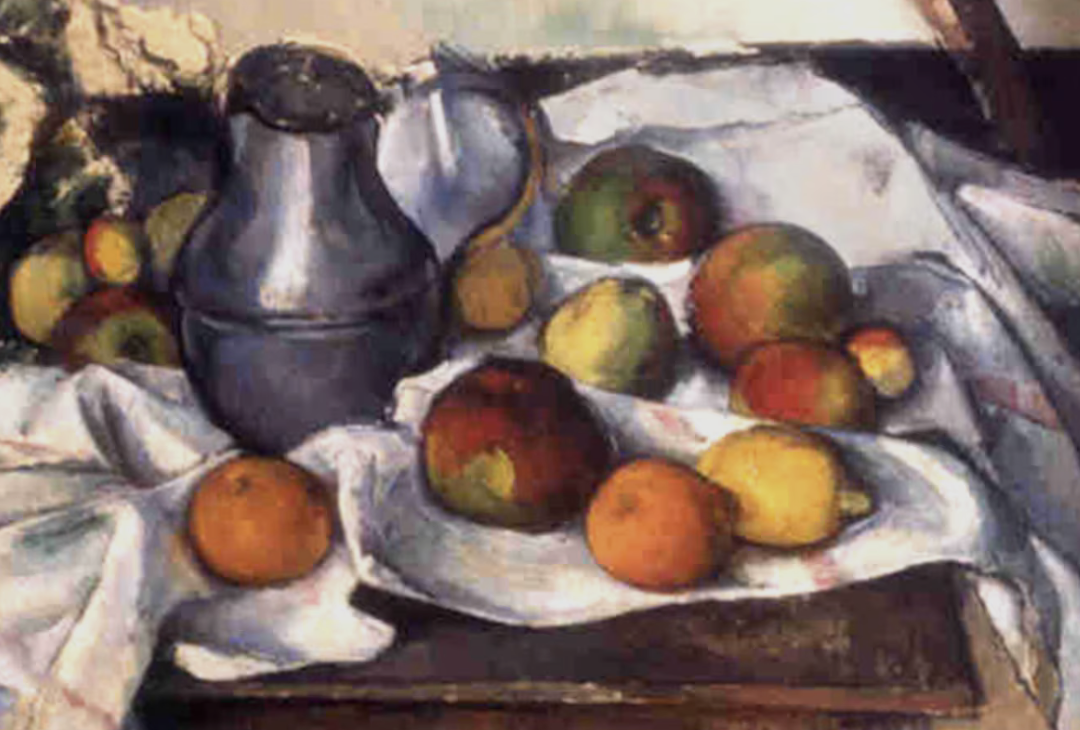
Paul Cézanne, Bouilloire et Fruits (1888–90).
An Unexpected Discovery
Then, in January 1999, an unusual enquiry arrived at the Art Loss Register (ALR), the world's largest private database of lost and stolen art. The enquiry came through a Lloyd's of London syndicate specialising in fine art insurance. A British businessman, known only as Mr W, was seeking transport insurance for a painting that was to be shipped from Russia to Switzerland. As part of its due diligence process, the Art Loss Register checked the details against its database. The painting was immediately identified as the stolen Cézanne. Even more surprisingly, photographs submitted alongside the Cézanne included two works by Chaïm Soutine that had been stolen in the same theft twenty years earlier. Mr W explained that he was acting on behalf of what he described only as a "Russian institution". According to the story he had been given, the paintings had been received as settlement for an outstanding debt. The anonymous owners were apparently aware that the works were stolen and were interested in discussing their return.
Why Recovering Stolen Art Is So Difficult
At first glance, recovering the paintings seemed straightforward. The owners had been located, negotiations could begin, and the works could be returned. In reality, it was anything but simple. The Art Loss Register follows two important principles when handling recoveries. First, no payment should be made to the original thieves or their close associates. Second, no payment should be made to organised crime. These principles exist to ensure that art theft does not become profitable. The problem was that nobody knew who the mysterious holders of the paintings actually were. If money changed hands, where would it ultimately end up? Could it benefit the original criminals? Could it find its way to organised crime groups? Without answers to those questions, negotiations could not proceed.
Following the Trail
The Art Loss Register hired private investigators to learn more about Mr W and the people behind him. Investigators discovered that Mr W appeared to be a legitimate businessman with no known criminal connections. He seemed to be little more than an intermediary. Over time, additional information emerged. The anonymous holders revealed that they possessed not only the Cézanne and the two Soutines, but also the remaining works stolen from the Bakwins in 1978. All seven paintings had survived. This was encouraging news, but it also raised new concerns. The fact that the entire group remained together suggested that the paintings might still be connected to those involved in the original theft. As months passed, the investigation expanded into a complicated web involving business figures in Russia, Estonia, and Monaco. The FBI, Scotland Yard, lawyers, insurers, and art crime specialists all became involved. Yet nobody could identify the true owners.
The Authentication Problem
Even if the paintings were recovered, there was another issue. How could anyone be certain they were genuine? The anonymous holders were sending photographs rather than the artworks themselves. Before negotiations could move forward, experts needed to examine the paintings. This created a dilemma. The Art Loss Register could not reasonably send leading art experts into what might have been a criminal environment. At the same time, the holders were unwilling to send the works to countries where they might be seized as stolen property. Eventually, a solution was found. The parties agreed to meet in Geneva, Switzerland, a neutral location that offered discretion, respected legal protections, and access to internationally recognised experts.
The Mysterious Owners
When negotiations finally began, the anonymous holders were represented by a Swiss lawyer known as Mr F. According to Mr F, his clients were respectable individuals who had no connection to the theft. He claimed they had acquired the paintings in good faith and wished to remain anonymous because they were well-known public figures who did not want their names associated with stolen art. The explanation raised more questions than answers. The holders were requesting a "finder's fee" of between 10% - 15% of the paintings' value in exchange for their return. Considering that the Cézanne alone was worth tens of millions of dollars, this represented a substantial sum of money. The Art Loss Register remained cautious. The holders could not provide documents proving how they had acquired the paintings. Nor could they fully demonstrate that they had no connection to the original theft. Without that proof, any payment remained ethically problematic.
An Unusual Solution
Eventually, both sides agreed to an extraordinary compromise. The holders would reveal their identities to a trusted third party rather than directly to the owners. Their names would be placed in a sealed affidavit and held in escrow by a London law firm for ten years. The document could only be opened with a court order or with the agreement of all parties. This arrangement allowed investigators to check whether the names matched any known suspects while preserving the holders' anonymity. Only after these checks were completed could negotiations continue.
The Meeting in Geneva
The climax of the story took place on 25 October 1999. Julian Radcliffe of the Art Loss Register travelled to Geneva together with two Sotheby's experts. They waited in a lawyer's office for Mr F and the long-awaited painting. Hours passed. Mr F failed to arrive. Eventually, a phone call explained that an unforeseen complication had delayed the delivery. When he finally appeared, documents were signed, sealed envelopes were exchanged, and preparations were made for the inspection. Then the painting arrived. Carefully unpacked under the supervision of the Sotheby's specialists, the work was examined in silence. The verdict was immediate. It was the missing Cézanne. After more than twenty years, Bouilloire et Fruits had finally been recovered.
A Different Ending
One might imagine that the painting was simply returned to the Bakwin family and hung back on the dining room wall. Instead, the artwork had become too valuable for that. Over the decades since the theft, the market for Cézanne had transformed dramatically. What had once been part of a collection worth around one million dollars had become a masterpiece valued in the tens of millions. The family decided to consign the painting to Sotheby's in London. Estimated at between US$15 million and US$20 million, the painting ultimately sold for US$29.3 million.
Plot Twist
Years later, investigations revealed that the paintings were not controlled by a mysterious "Russian institution" after all. Instead, they had allegedly been held for decades by Massachusetts lawyer Robert M. Mardirosian, who concealed his involvement through intermediaries, offshore companies, and international lawyers. The six remaining paintings from the Bakwin theft also became the subject of further legal disputes. Questions emerged about whether the Geneva agreement was legally enforceable and whether anyone could acquire legitimate ownership of stolen artworks through a recovery deal. The case eventually attracted the attention of the FBI and American courts. After years of litigation, the remaining paintings were recovered and returned to the Bakwin family. Perhaps most remarkably, while the artworks were ultimately found, the events surrounding the original theft remain unresolved. More than forty years later, we still do not know exactly what happened on the night the paintings disappeared from the Bakwin home.
The Verdict
The recovery of Cézanne's painting reminds us that art crime is rarely as simple as finding a missing object. Questions of provenance, ownership, ethics, authentication, insurance, and international law can be just as important as the theft itself. The case also demonstrates why provenance matters so much in the art market. Every ownership record, insurance document, exhibition history, and customs declaration contributes to an artwork's legitimacy. Without that history, even a genuine masterpiece can become difficult to sell, move, or reclaim. Perhaps most importantly, this story reveals that some of the art world's most important figures work behind the scenes. Investigators, lawyers, insurers, specialists, and organisations such as the Art Loss Register play a crucial role in protecting cultural heritage and ensuring that stolen artworks do not quietly disappear into private hands. More than a story about a stolen painting, the Bakwin Cézanne reminds us that every artwork carries not only financial and cultural value, but also a history that can take decades to recover.
Based on Anja Shortland’s Lost Art